Have faith; the ideal system is a moving target.
Time rolls on and with autumn comes an end to the growing season and a start to the traditional hay feeding season. In traditional systems in our area most farms begin feeding hay about Thanksgiving and continue through about April 15, a total of about 150 days in most years. This is a lot of hay feeding, but it is something that most don’t think twice about because that is what we always have done.
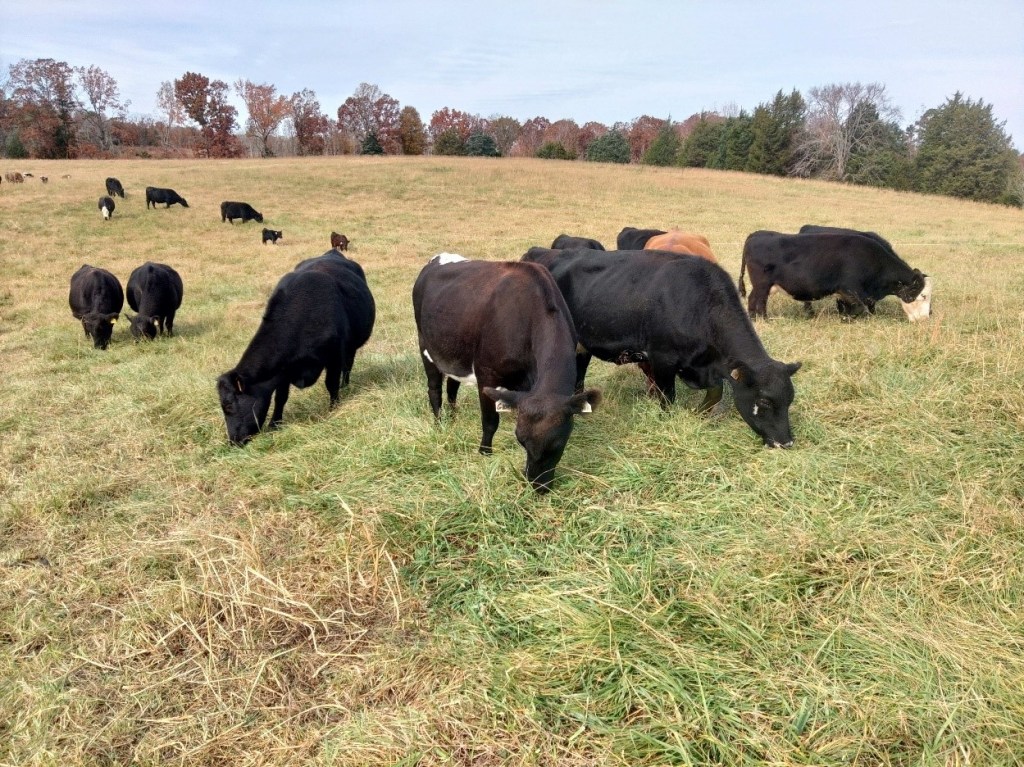
When I started working at NCSU 33 years ago I was interested in working on the practice of grazing stockpiled tall fescue to extend the grazing season. We encouraged farmers to close cattle out of one of their predominantly tall fescue pastures, in late August, clip and fertilize it, and then let the grass accumulate for winter grazing, rather than cutting it for hay. We recommended the use of frontal grazing to ration out the grass starting about New Years. This practice takes advantage of the improving palatability and reduced toxicity of tall fescue after it experiences significant freezing weather. We had many grazing schools and demonstrations with this amazing practice, and many farmers have adopted it.
Before we started working on our stockpiled tall fescue research and education program, I was grazing stockpile at Triple Creek. In fact, I first grazed stockpile using frontal grazing in 1982 when I was farming prior to going back to attend graduate school. In those days we had no polywire or tread-in posts….I was using 14 gauge steel wire rolled up on a car tire rim, and tobacco sticks with insulators wired to them for posts. Even with that crude equipment this practice was intuitively better than hay feeding or just giving the cows full run of the stockpiled pasture; I never forgot about that experience.
Today we use stockpiling for winter grazing to extend our grazing season into the late winter, and also use winter annuals to help us get started early. Our goal is consistent with the “300 days grazing” program in VA and many other states. For many years we were able to keep our hay feeding days at 60 or less, and often did 30 days of that feeding from October 15 to November 14 when we were in the early stages of calving.
In recent years, we have been challenged to get to our 300 days grazing goal. The combined effect of summer dry spells and droughts, and very wet winters that resulted in a lot of stand damage has turned our mostly cool season grass and clover pastures into pastures heavily influenced by summer annuals like crabgrass and foxtail, and summer perennials like bermudagrass and dallisgrass. While these summer plants might be an important part of a forage system, they are not desirable when they are in a stand you want to be mostly tall fescue for stockpiling.
This observation about loss of fescue stands is not unusual and is being reported all around the region by my colleagues. Crabgrass, dallisgrass and bermudagrass are becoming more common and have potential to be “good” contributors to your the system. Others that we see on the rise, including nimblewill and vaseygrass, have no redeeming qualities.
The original pastures at Triple Creek were established in the 1960s. They planted a mixture of KY-31 tall fescue, orchardgrass, bluegrass, dallisgrass, white clover and red clover. By the time we bought the place in 1977, tall fescue was the predominant plant everywhere on the farm. Stands were very strong and we used a lot of fertilizer at that time. It was not unusual to apply 200 lbs of N per year (100 spring and 100 fall), and with a strong fescue stand that will really grow a lot of grass. It also helped the fescue to become the only significant plant in the pastures! The big result of this was that tall fescue toxicosis became a huge problem for us.
Twenty years ago we began doing what we could to hurt the tall fescue stands to try to reduce our toxicosis problems. Withholding nitrogen fertilizer in the spring led to great expansion of legumes. We frost-seeded Will Ladino Clover over most of the farm and it really grew well, and red clover we never seeded appeared everywhere. We really enjoyed this time with great forage in the spring and summer, and good stockpile in the winter.
In the last 5 years, we have in general had very dry autumns and very wet winters. Couple that with the elimination of nitrogen from all our perennial pastures, and the tall fescue has really taken a beating. The last three years the winter stockpile has been more than ½ warm season plants mixed with the tall fescue. This kind of stockpile does not stand up to the elements and keep it’s quality in the winter, and the sod does not support cows in wet weather as well as tall fescue. We now start grazing this as soon as we need it, so we can get it grazed off before quality declines too much.
It has come to a point where we must take action to get our system back to balance. Our first step was to kill some of the better pastures to plant annuals, with the eventual plan being to plant Novel Endophyte Tall Fescue that we can manage to be pure fescue. We also further reduced our cow numbers to give us room to let the new pastures establish and to take some of the pressure off our old pastures. The extra income from the cows we sold helped with our planting costs on the new pastures.
Today we have all our Novel Endophtye Tall Fescue planted. Like everyone in the tall fescue belt we have had very limited moisture, but there was a little at planting and we do have many of the seeds germinated and starting to show. I am nervous about it, but I am reassured to know that we have one of the strongest plants in the seedling stage you can get, Novel Endophyte Tall Fescue!
We will continue to watch our stands develop and hope we all get some rain to help us get the desired results. I hope you all have a great Thanksgiving and are blessed with rain.
~ Matt Poore, NC State and Chair of the Alliance for Grassland Renewal
The Alliance for Grassland Renewal is a national organization focused on enhancing the appropriate adoption of novel endophyte tall fescue technology through education, incentives, self-regulation and promotion. For more resources or to learn more about the Alliance for Grassland Renewal, go to www.grasslandrenewal.org
 The Alliance for Grassland Renewal
Always look forward to your post each month. It’s uncanny how each article could have been written from experiences and observations here on my farm. Thanks Matt.
LikeLike