
There are times when it seems that if something can go wrong it will. It is not just Murphy’s law, it is the story of farming! It usually turns out that how you react to a problems is critical, and maintaining a good attitude is pretty much essential. Every cloud has a potential silver lining if you look hard enough, and sometimes you really have to look close.
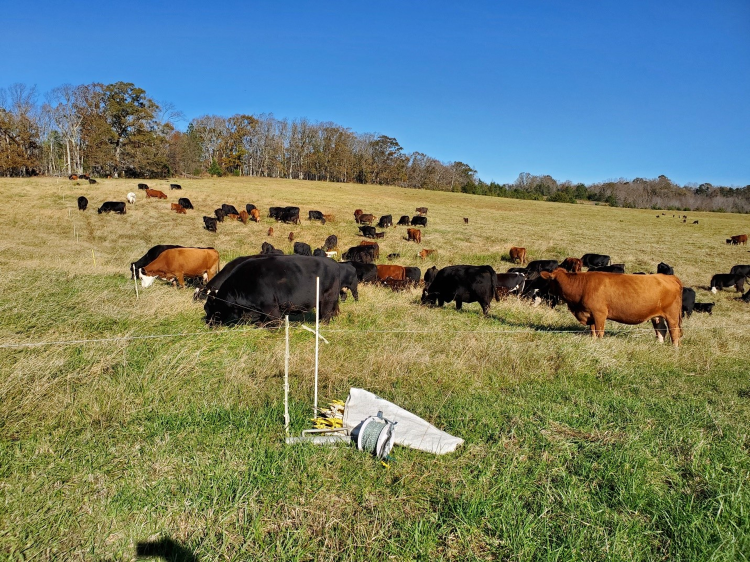
One of the worst things that can happen to a livestock producer is when their stock gets out of the fence. With cattle, this happens in two different situations, the first being when cattle find a hole in a poorly maintained fence and start escaping to eat the “greener grass on the other side”. This is not that big a problem, and often in these situations the livestock get in an out as they please, but never wander far. After having good, hot electric fences for a couple of decades, this kind of “cows out” has rarely been a problem for us.
The second kind of “cows out” is the much worse “catastrophic breakout” where the cattle are spooked for some reason, resulting in a stampede where cattle run right through fences and continue off the farm. Once we had an epic break out of 110 calves from the weaning pen on Mother’s day, during the Mother’s Day Party! Fortunately, these cattle were born on the farm where they stampeded, so most of them doubled back and came home. Those that did get gone stayed within about a mile of home where they found neighbors’ cows.
The last week of January I traveled to Kentucky to attend the Animal Science meetings in Louisville and the Equines and Endophytes workshop in Lexington. I had already been gone a week for the AFGC meeting the first week of January, so while I was home between the two trips we were busy on the farm. One task was to move 24 yearling steers to our satellite location, Pleasant Hills Farm, 8 miles south of the main farm. We use this farm where I spent my summers as a small child to grow out about half our fat cattle. These home-raised cattle are tame and used to being fed, so I was not worried about them. I left for Louisville on a Saturday with the farm in good hands.
I had a great meeting in Louisville representing the Alliance for Grassland Renewal, and visiting with friends and colleagues. On Tuesday I was driving to Lexington when I had a call from Brandon our herdsman. He said “we are at Pleasant Hills and the cattle are gone!”. I was speechless at first, but finally surmised that something had spooked the cattle and they had stampeded, tearing down fences as they came to them and leaving the farm. By that evening Brandon and his spouse Tina had located 5 on or near the property and had them back, making 19 missing.
I had a wonderful steak dinner that night in Lexington with my old veterinarian friend Dr. Dawn Bush, which helped me keep the trouble off my mind, but I spent a restless night with that helpless feeling going over and over what could have happened and what I would do if I was home. The next day at the Equines and Endophtyes Workshop, I really enjoyed learning the new information so that again distracted my mind, but once I got on the road to start driving home I was again preoccupied with the trouble.
Brandon reported in that he and Tina had calls about 7 head that were about 3 miles west of us, and another group of 7, 3 miles south. The 7 to the east turned out to belong to a farmer near where they were, and Tina helped him get them back in. The group to the south were ours, and an attempt to capture them with polywire and a handful of panels ended up with one in the trailer and 6 still roaming.
Fortunately, they recovered those six the next morning with the help of a neighbor, making 12 in and 12 still missing when I got home Thursday night.
At this point I was getting worried and contacted the local sale barns, our extension agent, and a friend who is a “cow catcher” just in case. I did feel a lot better that I was home and able to help with the hunt. After doing all the regular chores Friday morning we spent the rest of the day trying to follow trails where the cattle had left the farm, and then driving the roads around the area where we suspected they might be. We had a call about a group of 7 to the west in the afternoon. We raced over to that location where it turned out to be the same 7 Tina had helped the farmer with before.
We split up and continued to drive the roads. As I came back toward our farm just before dark, I spotted three grazing in a wheat field! I called Brandon and they came over with some feed and temporary fence supplies. Brandon was able to approach them, give them a little feed, and then lead them to an area where we thought we could load them.
As Brandon talked to the steers and kept them interested in the feed, Tina, the Cowboy and I built a polywire fence around them, using some high visibility polybraid and 7/8” fiberglass posts for corners. We hooked it up to a small battery energizer. We finished at dark, and felt with luck they would bed down and stay overnight. As it turned out they did stay put and we easily loaded them the next morning, making it 15 home, 7 still missing.
After the daily chores, we spent the rest of Saturday driving the roads looking. Finally, at about dark Brandon and Tina spotted the last 7 grazing on a power line about 3 miles from home. This power line cuts through a large stand of timber. When he tried to approach them they spooked and ran, so he backed off and left them alone.
We went back the first thing Sunday morning and Brandon took some feed up the powerline with the deputy sheriff equipped with a drone. They quickly located the cattle, but unfortunately there was no cell signal there, so Tina and I waited at the trucks not knowing anything. I decided to drive around to the other end of the powerline where it looked like pasture on the map to scout out how we might trap them if they did go that way.
I walked across that pasture to where the powerline ended, and was pleased that they had electric fence. There was a gap leading to the powerline which was also a good thing. I walked down the powerline a ways on a game trail to where I could see a long way, and in the distance I could see movement. I recognized the tiny speck of movement was the color of Brandon’s jacket as he walked. Then behind him, barely visible, were black specks that I realized were the cattle! They were making progress toward me, so I ran back to the truck and got busy.
By this time the owner came to see what I was up to, and he said we could put up polywire or anything else we needed. His cows were in that pasture, so the first step was to put up a strand of polywire to keep them from getting out. I did this quickly and a couple of cows came over to investigate, but amazingly they respected the fence. By this time Tina had joined me and we quickly set up polywire fences on each side of the powerline fanning out in each direction.
About the time we finished we heard Brandon in the distance calling the cattle as he brought them along. We quickly got out of the way and as we watched from up the hill; the steers followed Brandon right into that pasture! He had led them over two miles with just a few pounds of feed in a bag. Without
much trouble we loaded them up and carried them home. By 2 pm Sunday we had 24 of 24 back where they were supposed to be! We think they got out Monday night, so the last ones were out nearly 6 days!
After we returned to Triple Creek to do the chores for the day we were overcome by a great feeling of success. Many of our other problems now seemed small! I also reflected on situations like this over my life where I learned a lot, especially honing my stockmanship skills. It actually was an amazing experience for Brandon, Tina and the Cowboy who saw the benefit of all they had put into working with those cattle, not to mention the opportunity to practice low stress cattle handling.
Finally, it was awesome how our neighbors and the community in general spread the word and helped us to located these cattle. We had a chance to visit with many old and new neighbors over the time those cattle were out, and it was very rewarding to realize there is still a sense of community in our area.
As you go through your year on the farm remember that everything we do compounds, and there are times when all your efforts come together. Sometimes everything goes according to plan, but when things don’t go according to plan if you are adaptable and take advantage of all those compounded benefits things have a way of working out.
I will not do more than briefly mention our Novel Endophyte Tall Fescue plantings this month, as they are still small and in need of some warm weather and sunshine. Our scouting showed a mixed population of hairy buttercup, purple deadnettle, chickweed and henbit. We sprayed the plantings with 1.5 pint per acre Weedmaster for these winter broadleaf weeds last week, and will put 100 lbs/acre of urea (46 lbs N) out by the first of March so they can come out and quickly make a strong canopy.
I love this time of year! In Mid-February you can enjoy the cool weather and the cow feeding season, but you can also feel the life in the soil starting to stir. I look forward each day to watching the world spring to life.
~ Matt Poore, NC State and Chair of the Alliance for Grassland Renewal. February 2024
The Alliance for Grassland Renewal is a national organization focused on enhancing the appropriate adoption of novel endophyte tall fescue technology through education, incentives, self-regulation and promotion. For more resources or to learn more about the Alliance for Grassland Renewal, go to www.grasslandrenewal.org
 The Alliance for Grassland Renewal