
Recommended planting dates for Tall Fescue are generally September 1 to September 30 in northern (colder) regions of the tall fescue belt, and September 15 to October 15 in central and southern regions. These dates are ideal and give seedlings plenty of time to establish before freezing weather sets in.
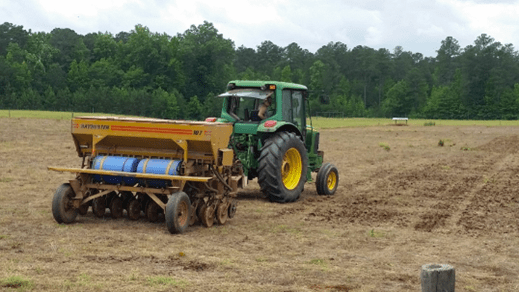
In recent years there have been debates about whether later dates might be more successful than early ones given potential for hot, dry weather, and insect pests like armyworms and grasshoppers in late summer. While most agronomists are most comfortable sticking to these traditional dates, most have had experience with delayed seeding because of hot and dry conditions, equipment breakdowns or seed availability. Late planting, even when seeding into dry land, is often successful when evaluated at the end of the following growing season.
This year the Tall Fescue Belt has again been challenged by a variety of weather conditions. Some areas have been very dry, while others have had unprecedented rainfall and flooding. Sporadic and poorly distributed rainfall during the summer and then excessive September rainfall in some areas have delayed planting on many farms. If soil conditions are very dry or excessively wet, it makes sense to wait for better conditions before seeding, even if it pushes you a few weeks past the traditional ideal dates. If conditions are very unfavorable October 15 and you have not bought your seed yet, then you should be considering planting annuals another year rather than risking planting the tall fescue.
If you have your tall fescue seed on hand and have delayed planting for any reason, then here is some advise that can help you. If you have been delayed due to equipment breakdown, a family emergency, or some other competing activity, then buckle down and get your seed in the ground as soon as possible. If it is too wet to plant, then waiting until you can get on the land without doing damage putting the seed in the ground. Be careful not to get the seed too deep as drill penetration will generally be deeper in wet soil than in dry.
If you are dry, then it is best to wait until you get significant moisture to germinate the seed. Eventually, however, you will need to drill the seed into dry soil when you reach the latest possible date to plant. General guidelines for the latest date you should go ahead and plant (even if it is still dry) would be October 15 in more northern parts or higher elevations, November 1 in central parts and November 15 in the southern parts (or low elevations in Virginia and North Carolina) of the Tall Fescue Belt. If you do have your seed and are facing a difficult situation, talk to your supplier as they might replace seed not planted this year with new seed for next year (if you decide to plant an annual), or they might support you if you plant and the stands fail due to continued dry weather.
If you choose to plant into dry land, keep a few things in mind. If you are using a no-till drill to seed make sure your drill is getting into the ground. If using tillage, make sure that there is enough moisture to make a firm seedbed, and don’t get the seed too deep.
If you have put forth the effort to renovate your tall fescue pastures this year, follow through and put the seed in the ground! Continue to wait for some moisture if you are in the central or southern regions of the tall fescue belt, but if you are in the northern areas, plant now and pray for rain. An old farmer once told me regarding late planting; “Seed left in the shed never grows”. Keep that in your mind; plant the grass and feel good that you are taking a risk to dramatically improve your forage system. Farmers that took this risk last year saw a very high rate of success.
Stands planted in Autumn 2023 should be well established and growing vigorously if you have had moisture. These stands should be fed some nitrogen again this fall to stimulate the further development of these stands. If you have not put any nitrogen on this fall yet, then 30 lbs/acre of nitrogen would be generally recommended. It is important to note that on land that has been in pasture for a long time there will be residual nitrogen mineralized that may make your applied nitrogen less critical. You can use the color of the grass along with your historical knowledge of the pasture to guide your nitrogen application. If you cut the tall fescue for hay, make sure you apply enough potassium and phosphorus to replace what you removed in the hay (typically 15 lbs of P2O5 and 50 lbs of K2O per ton of hay).
~ Matt Poore for the Alliance for Grassland Renewal
The Alliance for Grassland Renewal is a national organization focused on enhancing the appropriate adoption of novel endophyte tall fescue technology through education, incentives, self-regulation and promotion. For more resources or to learn more about the Alliance for Grassland Renewal, go to www.grasslandrenewal.org
 The Alliance for Grassland Renewal