
Weather conditions have been mixed across the region so far this winter, but spring conditions will be with us soon. We have had enough cold weather to keep tall fescue dormant in most areas, but it will green up and take off shortly, especially in southern parts of the tall fescue belt. Now is an important time to scout tall fescue fields and make plans for spring weed and fertility management.
Even the latest fall plantings should be starting to tiller by now, with the exception of those fields that were planted into dust at the very end of recommended planting season. These very late-planted stands may still be too small to survive an herbicide application, so make sure you look at the plants carefully. Most of the available herbicides labeled for tall fescue can be applied to tall fescue after the 4 leaf stage.
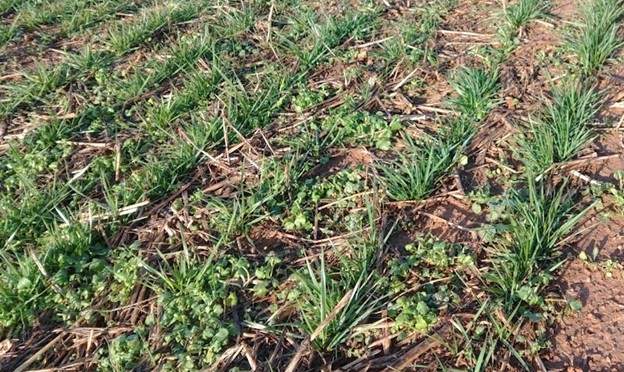
In many cases a broad spectrum broad leaf herbicide will be needed to kill a wide variety of winter weeds, and some tough weeds may need a residual component. Make sure to spray during a stretch of warm weather before weeds get too big. Check with your extension agent or other advisor to determine the best herbicide and application rate for the weeds that you have. If your sprayer is not ready to go, service it and be ready for the first warm spell.
In southern regions it is time to put a small amount of nitrogen on new stands of tall fescue. About 50 lbs nitrogen per acre should be adequate. In more northern regions or at higher elevations apply nitrogen in March as soon as you can get on the land. If soil was fertilized to soil test before planting, it is not necessary to apply a complete fertilizer unless you plan on harvesting hay. For hay fields you should apply at least the amount of potassium and phosphorus you expect to remove in the hay crop. This is typically 15 lbs of phosphate and 40 lbs of potash per ton of hay. Second year stands will be ready to respond to a full rate of nitrogen, so plan on applying 50 to 75 lbs nitrogen plus any needed phosphorus and potassium in late February or early March, and plan to reapply nitrogen in late summer.
If clover is desired in the stand, February is a good time across the region to frost-seed. Second year stands may be frost-seeded after they are grazed off. Broadcasting 6 lbs of red clover and 2 lbs of white clover on grazed sod is suggested. If only a single species of clover is planned, then use 10 lbs of red or 4 lbs of white. Make sure to manage weeds before the year you plan on frost-seeding as it will be difficult to manage most weeds after the clover is established. Don’t use any nitrogen if you seed clover and make sure you keep pastures grazed to allow the clover to establish.
It is a good time to plan your spring harvest management for first year stands. If you plan to cut hay, make sure you do that early so plants can tiller before warm season weeds come on. Also, cut at a height of 4 to 6 inches to promote regrowth and minimize bare ground. If you plan to graze, use light animals if possible to reduce treading damage, and leave at least 6 inches of residual height to promote regrowth. Grazing often results in the best stand development because it promotes tillering, but it is critical to avoid short grazing during the first year to prevent invasion of summer annual grasses and broadleaf weeds.

Tall Fescue continues to be the best base forage for the tall fescue belt. If you have tall fescue-based pastures it is critical that you learn all you can about how to manage it. Plan on attending an educational event this spring and explore the Grasslandrenewal.org web site which has great information that can help you.
 The Alliance for Grassland Renewal