Spring is just around the corner, and with not much time left, that means it is time to start thinking about what crop to spring plant. Why not try Moxie teff grass, enhanced with Yellow Jacket® seed coating? Teff (Eragrostis tef) is the perfect grass for late spring seeding in the transition zone, cool season region, or warm season regions, surviving both wet and dry climates. Teff is an ideal crop to fill the summer slump gap when cool season forages run out.
Teff is a warm season annual bunch type grass with its origins in Ethiopia. Likely domesticated over 6,000 years ago, teff originated as a cereal crop. Teff’s seeds are known for being high in calcium, iron, and protein, and with being gluten free, it is no wonder that teff is flourishing in today’s health food industry.
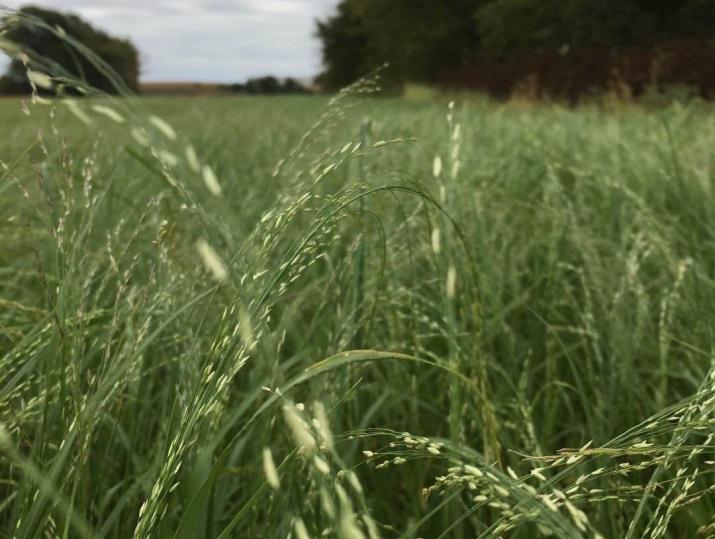
With a large crown and many tillers, teff germplasm has a wide variation of agronomic traits. The first teff cultivators in Ethiopia used left over teff straw from the threshing of the grains as a forage, since teff was considered to be superior to straw from other grain species. Today’s teff, including Moxie, has been bred to be a very palatable, fast-growing crop with superb forage quality and high yield. Adapted to low inputs and multiple harvests, teff can be used as either dry hay, silage, or inter-seeded into a pasture for a broad scope of livestock including beef, dairy, horses, goats, and sheep.
Given its fast growth rate, teff makes for a great emergency forage if other crops fail shortly after spring planting.
Teff is extremely small seeded, at approximately 1.3 million seeds per pound, so great care should be taken during sowing. Things to consider when planting teff:
- Soil temperatures should be at least 65°F
- Seed bed should be very firm to ensure good seed to soil contact
- Seeding depth should be 1/8” to 1/4″ deep
- If broadcast seeding, it is recommended to roll the seed bed after broadcasting
- Germination will occur at 4-5 days
~ Provided by Robin Lamp, Barenbrug USA
The Alliance for Grassland Renewal is a national organization focused on enhancing the appropriate adoption of novel endophyte tall fescue technology through education, incentives, self-regulation and promotion. For more resources or to learn more about the Alliance for Grassland Renewal, go to www.grasslandrenewal.org
 The Alliance for Grassland Renewal