
Finally Mother Nature has given up her hold on Winter, and Spring has arrived in Georgia! Looking out onto our green cool-season grasses and seeing our livestock happily grazing provides the welcome realization that we have once again survived the cold of winter and have truly moved onto greener pastures. However, it’s never too early to be focused on the next potential forage stressor in our region – the dog days of summer. In Georgia we are no stranger to the long, hot, intense days of summer and the impacts we see on forage availability throughout the grazing season. We are fortunate that much of our state has some very hardy, prolific, perennial forage options, but even in the most extreme droughts bermudagrass and bahiagrass can have difficulty surviving for the long haul. In order to protect our perennial forages for long-term stand life, there are times that we should evaluate alternative forage options to allow our permanent stands to rest and recover. The first key to drought management is preparedness and being prepared means having the right tools ready when needed. Planting summer annual forage grasses is yet another tool in our toolbox to help extend the grazing season and provide forage during environmental stressors.
Why Use Summer Annual Forage Grasses?
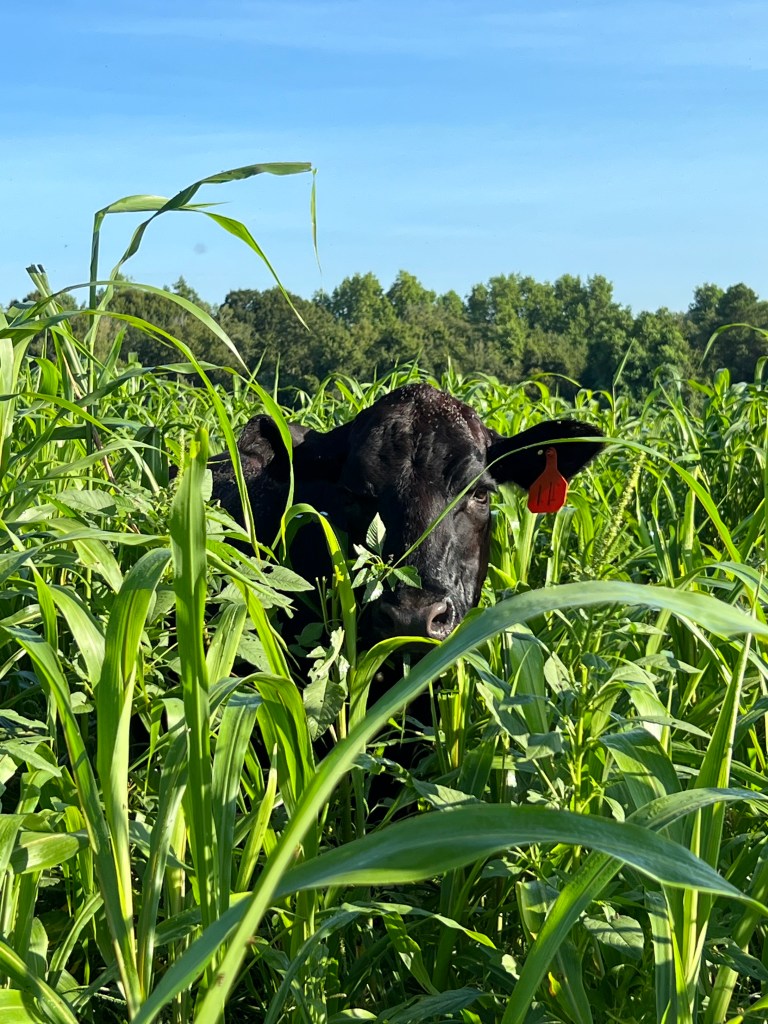
When looking for a short-term temporary pasture alternative, summer annuals prove to be an excellent choice as they can provide fast forage when forage is limited. They are known for being relatively easy to establish, with quick emergence, and high productivity for a short amount of time. Best of all, summer annual forage grasses are very drought and heat tolerant and provide relatively high forage quality in comparison to some of the other forage options at the same time of year.
Summer annual grasses commonly used in Georgia include pearl millet, sudangrass, sorghum X sudangrass hybrids, and forage sorghums. Planting of these species can occur as soon as soil temperatures reach 65oF and continue through mid-summer. In ideal growing conditions these grasses can be available to graze within 35-45 days from planting. For the latest on planting dates, rates, and forage variety recommendations reach out to your local extension office (extension,uga.edu) and visit the Georgia statewide variety testing webpage (swvt.uga.edu).
When to Consider Summer Annual Forage Grasses
When putting together our forage management plans we must remember that having a strong perennial forage as our base is paramount, therefore we do not recommend relying on annual forages for the biggest piece of our system. We need to see our annual forages as a “tool in the toolbox” ready to be used in the right situation. So when should we consider summer annual forage grasses?
Below are 5 practical situations in which considering summer annual forage grasses just makes sense.
- As an Emergency Forage Crop – when forage supplies are low and a quick growing forage option is needed
- In a Double-Cropping System – summer annual grasses are a great option to provide temporary cover and use of land after an early crop or between cropping seasons.
- When “Salvage-Crops” are needed – This is an effective method to make use of fertilizer that has been applied to a summer row crop that has failed.
- During Pasture Renovation – Summer annual grasses are a great way to provide grazeable or harvestable forage material while working on preparing and/or repairing the land with a complete pasture renovation. This is very common practice when using the spray-smother-spray technique when renovating tall fescue land.
- In an Annual Rotation Forage System – This is highly successful when using crabgrass in rotation with annual ryegrass.
Grazing Summer Annual Forage Grasses
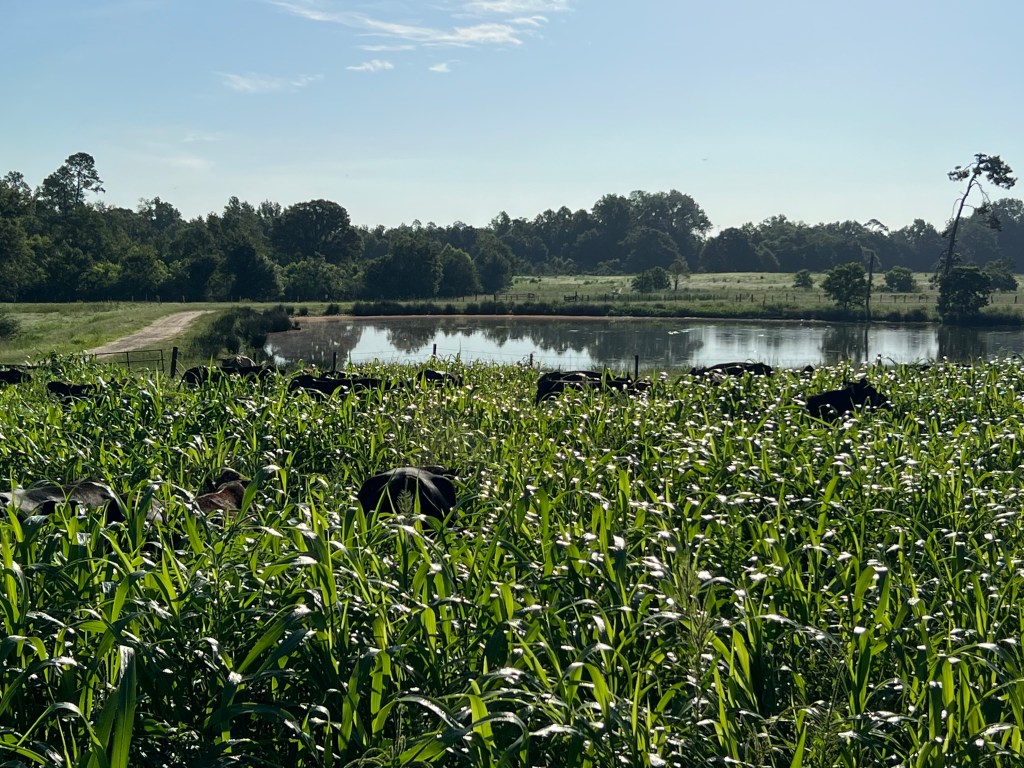
Grazing can be an effective management tool for harvesting these grasses as they grow tall with very thick stems and can be a challenge to dry down for dry hay. However, effectively grazing these species requires some effort. We must recognize that while these are warm season grasses, they must be managed differently than our perennial bermudagrass and bahiagrass pastures. Grazing these species down to a nice clean tight turf will result in significant injury for the plant and can be detrimental to our cattle health, thus continuous grazing is not recommended.
A general guideline from Southern Forages (5th edition) for rotationally grazing summer annual forage grasses is to begin grazing when forage material is between 20-24 inches, cease grazing at 8-10 inches, and allow for at least 10-20 days rest and recovery. Expected average daily gains for these species can be from 1.5 to 2.0 lbs/day under good grazing management. Pure stands of summer annual grasses are most efficiently managed when stripped grazed, allowing access to a small area of the field usually no more than 2-3 days worth of material and moving quickly across the field, or limit grazed, allowing limited access to the field for a specific period of time (i.e. hours per day or alternate days) and then returning to a perennial pasture or feeding area for the majority of the day. These methods allow for the most efficient use of summer annual grasses. Remember that when managed properly summer annual grasses provide a large amount of material very quickly, thus stocking density and rotation speed will need close attention for optimum utilization.
Be aware that warm season forages have the potential for nitrate and prussic acid accumulation during significant environmental stress which can be harmful when fed to livestock. In the summer months, nitrate accumulation most often occurs when nitrogen is applied just before or during periods of significant drought. Prussic acid poisoning is most commonly seen after a killing frost. In most cases these toxicities can be mitigated by paying close attention to what is happening environmentally, limiting access to the fields when conditions are unfavorable, and testing forage material that may be suspect before feeding it to livestock animals, especially for nitrates. Note that unlike nitrates that can remain stable if harvested during stress, prussic acid levels will dissipate and be safe to feed within a few weeks.
Is it Economical to use Summer Annual Forage Grasses?
As any Ag Economist would tell you – It’s Depends! There are a variety of things to consider when justifying the use of summer annual grasses. Each situation is different and not all situations justify planting summer annual forage grasses. Start by asking yourself a few questions like:
- What are my forage needs for the summer?
- Do I have a surplus or lack of forage supply?
- What are the forage needs of my livestock?
- What class of animal am I feeding?
- Dairy: Can most often always justify the use of summer annuals
- Beef Cow/Calf: can justify use in an emergency forage situation
- Beef Stocker: highly dependent on the price of cattle
- Equine: not commonly used – would be highly dependent on forage need and other forage options available – Avoid Sorghum Species.
- What are the current cattle and/or milk prices?
Remember:
Land preparation, seed, and fertilizer are needed annually!
These costs tend to be relatively high and should be evaluated strongly when considering the use of summer annual forage grasses!
While we are enjoying the greener pastures we have today, let’s not forget to be prepared for what comes tomorrow. After almost 10 years in Georgia I can confirm this common saying rings true “In Georgia we are always only one day away from a drought!”
Be prepared, be proactive: It’s never too early to be forward thinking about our forage-systems!
Want to learn more about summer annual forage grasses, including seeing the varieties being tested in 2025? Save the date and be sure to join us in Tifton for the 2025 Corn Silage and Stored Forage Field Day event – June 12, 2025!!
~ Jennifer J. Tucker, Ph.D, Associate Professor, Beef Nutrition and Forage Management. Department of Animal and Dairy Science, University of Georgia
The Alliance for Grassland Renewal is a national organization focused on enhancing the appropriate adoption of novel endophyte tall fescue technology through education, incentives, self-regulation and promotion. For more resources or to learn more about the Alliance for Grassland Renewal, go to www.grasslandrenewal.org
 The Alliance for Grassland Renewal