
New stands of Novel Endophyte Tall Fescue should be growing well. Despite challenging establishment conditions again last fall, most reports are of successful establishment, but we have also heard about a few failures. Prepare to remove spring growth on these new stands by grazing several times or cutting for hay. If grazing, graze for a short time and not closer than 4 inches. Provide at least 3 weeks of rest after grazing. Be careful not to graze these stands in extremely wet conditions to avoid stand damage. If planning on cutting hay, cut in the boot to early bloom stage and leave 6 inches of stubble to promote fast regrowth, tillering and ground coverage.
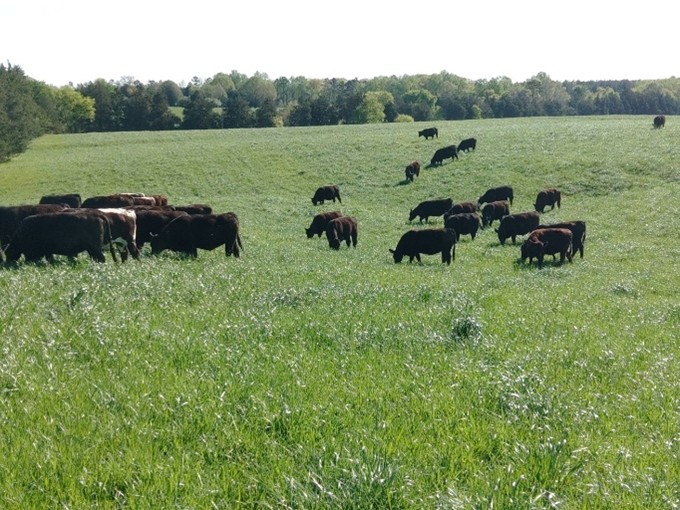
If you have new plantings that have poor stands, decide how you will approach the problem. One option might be to overdrill the pasture with additional novel endophyte tall fescue or another cool-season grass species, but that should be done as soon as possible. If the stand is very poor consider restarting the renovation by spraying glyphosate and planting a summer smother crop, and plan on reseeding the novel endophyte stand this autumn. If the stand is not too bad, consider skipping the glyphosate to preserve what fescue is already there and over seed with a summer annual.
Evaluate pasture condition and consider pastures to be renovated in Fall of 2025. Take care to control seed heads by grazing and then clipping, or by cutting hay by early bloom. Reducing the production of tall fescue and ryegrass seed will be critical to getting a good stand of novel tall fescue next fall.
Once you have decided which pastures to renovate, make sure you get soil samples and make plans to apply recommended lime well ahead of planting in the fall. If phosphorus and potassium levels are at least medium, then applying these along with 30 lbs of nitrogen at planting should work well. If there are winter and summer weeds on this land control those plants so they don’t produce seed. The use of a broad spectrum broad leaf herbicide to control common weeds like buttercup, horsenettle and spiny pigweed this summer will make for a more successful planting in the fall.
Take time to study the forage options you have, including learning about the different types of Novel Endophyte Tall Fescue products available. If you plan on planting a diverse mix, remember that Novel Endophyte Tall Fescue makes a very strong base for pasture mixes for the Tall Fescue Belt. Additional species that we see in successful mixtures include Orchardgrass, Red Clover and White Clover
~ Matt Poore, NC State and the Alliance for Grassland Renewal
The Alliance for Grassland Renewal is a national organization focused on enhancing the appropriate adoption of novel endophyte tall fescue technology through education, incentives, self-regulation and promotion. For more resources or to learn more about the Alliance for Grassland Renewal, go to www.grasslandrenewal.org
 The Alliance for Grassland Renewal