If you plan to plant tall fescue this fall, decide which variety you want to grow and get your seed ordered as soon as you decide. For information on the commercial varieties available and a list of certified dealers visit www.grasslandrenewal.com. Note a new variety approved by the Alliance for Grassland Renewal, “Triumphant Protek” from DLF, will be available with better seed supply than last year. The other varieties on the market are Lacefield MaxQII, Jesup MaxQII, Texoma MaxQII, Estancia with ArkShield, Martin2 Protek, Tower Protek and BarOptima plus E34. Each has it’s only selling points and origin story so you are encouraged to study them all.
If you plan to plant tall fescue this fall and have not soil tested, get samples immediately and plan on liming and fertilizing well before planting. Follow your renovation calendar carefully and apply glyphosate on the optimal date for your renovation strategy. If you plan to use “Spray-Smother-Spray-Plant” and have not planted your summer annual yet, consider switching to the “Spray-Wait-Spray-Plant” system.
By June, most tall fescue tillers that produced a seedhead have dropped mature seed. Any of these seeds could come up and contaminate a new seeding of tall fescue. If you planned on planting tall fescue this fall but didn’t control seedheads, continue with your plan but postpone planting fescue until next year and use a cool-season annual (but not annual ryegrass) this winter and a warm season annual next summer. With stands of Novel Endophyte Tall Fescue it should be ok to allow mature seed to develop and build a seedbank to be a future benefit to your pasture.
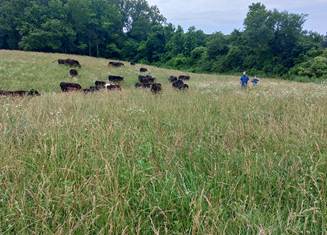
If you are just now thinking you might renovate some toxic tall fescue pasture, use glyphosate to kill the existing stand now and plant a summer annual, or wait and kill it in late summer and plant a winter annual. Follow with cool- and warm-season annuals and plan for tall fescue planting next fall. While some land should never be tilled, in some situations a tillage step will help incorporate lime and fertilizer, and may result in better stands that no-till.
With first-year stands, the challenge of surviving summer is upon us. We need to make sure that any grazing from now until cooler weather is light. It is the best advice to make hay or graze new stands in April and/or May and then staying off them completely during summer. A light grazing in late August or whenever there is a lot of biomass available can then be used to stimulate tillering and set up the fescue for high quality summer growth.
For any developing stand of cool season grass, make sure to follow the principles of drought management. Namely, never overgraze any pasture, especially a new stand. Instead, if you have no grass ready to be grazed then move the cattle to a sacrifice area where they can be fed hay until rains return. Farmers that practice this approach find that a few weeks after a good rain their fields will recover quickly. Even when moisture is adequate follow the principles of drought management so you are resilient when dry weather does hit.
~ Matt Poore, NC State and chair of the Alliance for Grassland Renewal
The Alliance for Grassland Renewal is a national organization focused on enhancing the appropriate adoption of novel endophyte tall fescue technology through education, incentives, self-regulation and promotion. For more resources or to learn more about the Alliance for Grassland Renewal, go to www.grasslandrenewal.org
 The Alliance for Grassland Renewal