
It has been a crazy year for precipitation over much of the eastern USA! In North Carolina and Virginia we have had very hot dry spells and in between, flooding rains. Our last big rain was from Tropical Storm Chantal that hit the central Piedmont of NC on July 7, 2025. Rainfall in the area ranged from 5 to 12 inches in one day, and fortunately we were in one of the 5 inch areas. After Chantal we had little rain through the remainder of July, but still came up way ahead of average for the month and the year. Last week we returned to the wet weather, and we had another 5 inches that came slow over a 5-day period accompanied with highs in the 70’s! That is unheard of for us, and we really appreciated the break from the heat we had been having.
As a result of our wet summer we have an abundance of forage everywhere on the farm. We have a 35 acre field in the front of the farm that we have split in half with Novel Endophyte Tall Fescue on half and the other half as volunteer crabgrass and johnsongrass in the summer, and ryegrass for the cool season. This is where we develop our replacement heifers from the time we start breeding them through the weaning of their first calves. This system works out really well when it rains like it did this summer. We can lightly hit the tall fescue to keep control of warm season forages, and get most of the grazing days during summer out of the crabgrass and johnsongrass. The heifers achieve a high level of performance and calve in excellent body condition without concentrate supplements.
Until several years ago we grew either pearl millet or sudangrass for the summer pasture, and each year we had a lot of trouble with volunteer crabgrass and Johnsongrass. We had to spray glyphosage just ahead of planting the summer annuals. If we didn’t spray or waited too long to plant we would have so much crabgrass and Johnsongrass that the planted species would suffer badly. My colleague Johnny Rogers had a similar situation and decided just to let his go to crabgrass, calling it “Poor Man’s Summer Annuals”. After spending considerable time, effort and money drilling something in there, we also decided to just let those aggressive species dominant this area.
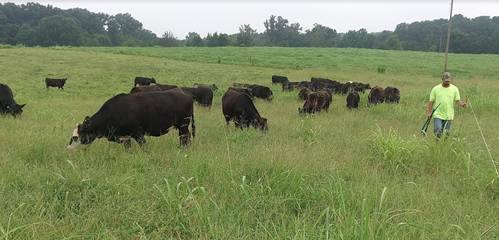
Some areas have more Johnsongrass than others, but the cattle really like both species and we get remarkably high grazing days and animal performance. We are currently grazing this set of pastures with a group of weaned calves and our pregnant first-calf heifers and they are in great body condition.
As of today we are working through an area with a lot of Johnsongrass, so we are using a high density, non-selective system to get a high level of impact. Because of the stage of these cattle we don’t need super high performance, so it seems to match them really well. After we finish this round we will flash graze across the novel endophyte tall fescue side of the field so the cattle can eat the crabgrass and Johnsongrass that are also present over there (where we would rather not have them). We will get good regrowth on the summer pasture side and will be able to graze it on the next round into October when we will plant the ryegrass.

Johnsongrass is actually turning into a significant problem for us across the farm. I like Johnsongrass’s persistence, and the quality it has when young, but as it matures it really gets tough and the cattle don’t want to eat the stem. It also smothers out more desirable forages (like novel endophyte tall fescue). In the back of our farm where we keep the mature cow herd it is especially thick and we have come no where near getting over it all with just the dry cows. Two weeks ago we moved all the cattle groups but one to the backside of the farm where they are doing their best to eat through a big overabunadance of these summer grasses which also include a lot of dallisgrass and purple top. We will bushhog these pastures behind the cows to set them up for the next round. The areas with very high stands of Johnsongrass will be overseeded with ryegrass in November after the final grazing.
We are renovating several new fields to novel tall fescue again this year; 7 acres on the main farm and 12 acres on Brandon and Tina’s land. The good growing weather this summer really pushed a lot of growth on the sudangrass we planted on the main farm. We just finished grazing this for the first time with our weaned calves and it was about 8 feet tall by the time we got through it. Despite it’s size, the nutritional value of this forage is quite high because of the BMR gene which keeps it from getting tough and indigestible when it gets big like this. It is a challenge to put cross fences through it, but it is a lot of fun when you see the calves disappear into their new section!

On Tina and Brandon’s land we planted browntop millet to get an inexpensive summer smother crop that we could just harvest one time, leading to an early planting time for the tall fescue. That made a really nice hay cutting two weeks ago and that land is waiting a glyphosate treatment about the first of September, and planting September 15.
On the main farm we plan on planting Lacefield MaxQ2 and Triumphant Protek as we don’t have stands of these two promising varieties yet. On Brandon and Tina’s land (which will be used for hay for the foreseeable future) we will plant a mix of Tower Protek and Orchardgrass. We know the Orchardgrass will not last indefinitely, but the idea is for tall fescue to tiller and take over as the stand develops. We will also add red clover for a legume component after the grass is well established. We have other fields where we planted this mix last year and they really look good.
On our two and three-year old plantings of Novel we have excellent stands except on one area that was planted very late last autumn. That area ended up having a balanced stand of dallisgrass, red and white clover and buckhorn plantain to go with the tall fescue that is there. We will use this pasture and add more grass to it as we deem necessary.
We do have a variety of broadleaf weeds including pigweed, horsenettle, and arrowleaf sida, on one of the 9-acre fields, so we sprayed with Duracor. The other stands have substantial Johnsongrass and crabgrass, and the wet weather has really accentuated that problem. We have grazed several times through the summer with the goal of getting the animals to eat off the Johnsongrass and crabgrass that might be there and moving them to a new block before they eat much tall fescue. This has been successful for the most part and we hope to have less of this Johnsongrasss problem as the stands thicken up in the future.

Even with the frustrations with weather and the inevitable problems you have when managing pastures and livestock, every day is a challenge and an opportunity to enjoy nature and our place in the pastureland ecosystem.
~ Matt Poore, NC State and the Alliance for Grassland Renewal
The Alliance for Grassland Renewal is a national organization focused on enhancing the appropriate adoption of novel endophyte tall fescue technology through education, incentives, self-regulation and promotion. For more resources or to learn more about the Alliance for Grassland Renewal, go to www.grasslandrenewal.org
 The Alliance for Grassland Renewal