When I wrote my Journal a month ago I couldn’t imagine what the next month would be like! As we are all well aware, a major polar air mass settled over the eastern US, bringing with it unprecedented cold along with a series of major winter weather events. We had snow four different times, with a major ice storm (which thankfully came as sleet), and then two significant snows on top of the 2 inches of ice. Today is the first warm day we have had in a month, and thankfully the most difficult icy spots are finally melting.
I had planned to travel to Rogers, Arkansas for a professional meeting the last week of January. The ice storm paralyzed travel across our region the weekend I was to go, so I had to stay home with the cows. We were very thankful that we didn’t lose power as so many did in neighboring states. When we hooked up our generator before the storm we found that it was malfunctioning, putting out too much voltage. There were of course no generators to be bought anywhere locally. Fortunately we were able to borrow one from Brandon’s uncle, so we were ready for that threat that never developed. Be thankful for thoughtful neighbors, they are critical in times like these.
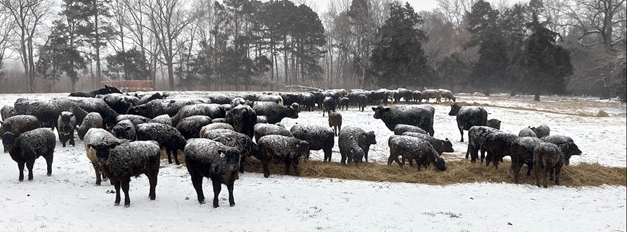
Over the years we have upgraded our watering system considerably, but still have a few small groups on a hydrant and hose. This year we are especially challenged in the field we use for our replacement heifers after breeding because that water tank ran off the house water, which has been out of commission since the fire. This leaves us with our replacement heifer group on a 100 gallon tank with 150 foot of hose feeding it. This normally would not be a problem for us, but with many days in a row with lows in the teens and highs in the 30s it just does not work. We all know the job of draining the hoses and storing them away somewhere warm to get through a cold spell. We eventually added some extra tank volume so we only had to fill every other day. After almost 3 weeks of that, we hooked back up the hoses today and rejoiced at the prospect of a week of warm weather!
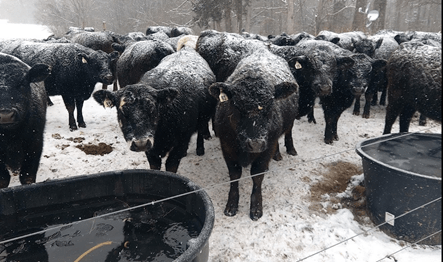
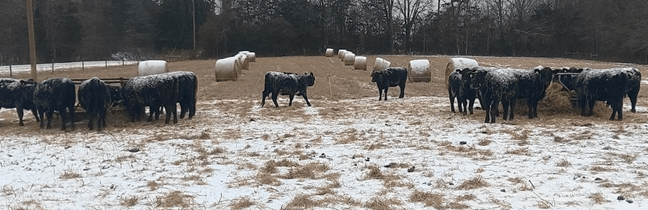
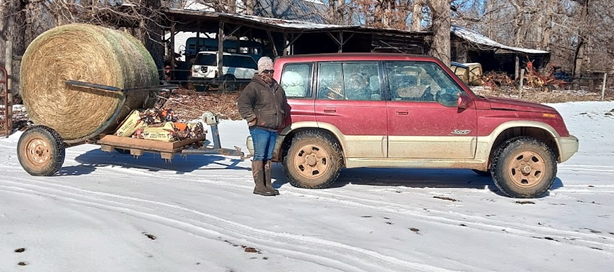
In early January we set up bale grazing arrays for our major groups. This winter mess showed us once again how useful that bale grazing practice can be. We were able to negotiate the ice and snow in our little Suzuki Sidekick, with the hay for unrolling and the feed and cottonseed we needed for each group. To feed hay we simply needed to move our hay rings to the new bales and move the polywire. We had a couple of breakouts due to deer or calves breaking the wire, likely due to poor visibility, but nothing more than a 20 minute inconvenience. Compared to having to get out, crank the tractor, and put out hay it was really easy.
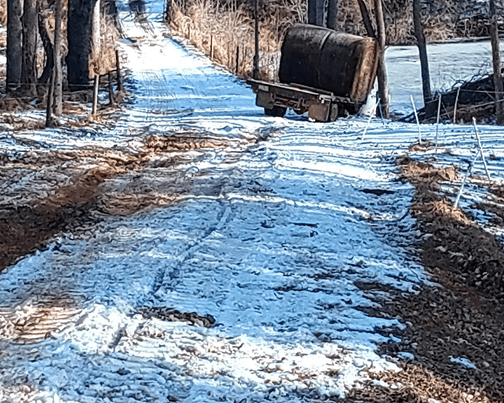
The mature cow herd had enough hay out to last about 4 weeks when we placed bales in early January. Unfortunately, the cows ate more than expected during the bad weather, and we didn’t see an end to it, so we decided to put out some more bales. This resulted in the ride of my life in the flat-bed dump truck, down a hill and toward our big pond! I had taken a first load, and I was able to make it down the hill, past the pond and out to the back pasture. On the second trip, I started sliding on some mud that had developed that afternoon, and by the time I hit the solid ice stretch I was going pretty good. I ran off the road and through the high tensile fence. I was lucky that a tree caughton one of the bales, or I would have gone off about a 6 foot bank, and would have done some serious damage. It was a week later before things melted enough to get it out! Thankfully no damage; just another reminder to make sure you stay ahead on putting out the hay to avoid these situations!
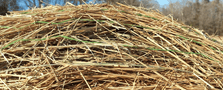
As I reflect on the month, I would say that bale grazing is one of the better things we have run across. I was skeptical at first as I have preached getting your hay up and in a barn or otherwise covered storage for my whole career. I looked at bales today that had been out for over a month through a lot of rain, snow and ice. The bales appear undamaged, with no deterioration of the hay, even right under the surface of the net wrap. Putting out bales when it is convenient and when the weather is good really helps you get through these tough weather conditions, and your hay will not deteriorate.
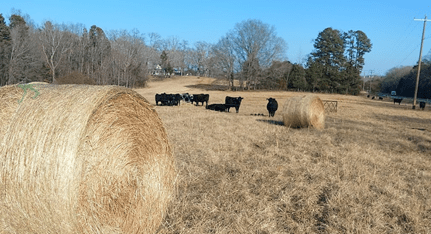
Today it was 60 degrees and I got hot in my light coveralls as I walked pastures and scouted for weeds! Our two and three year old stands of Novel Endophyte Tall Fescue look great and will be ready for nitrogen in the next few weeks. We have some new stands that look good, but others that really suffered during the dry fall and then the yo-yo temperatures and ice we have experienced. Our annuals in general are in poor condition. We will hope for the best and have some confidence that the stands will recover and yields will be satisfactory.
As we move into next year, I am confident that we will see much better yields than we used to get before we renovated these pastures. These new plantings will get one more year of weed control (if needed) and then we will plan on doing some frost seeding of clovers next winter.
I know that nearly everyone in the tall fescue belt can understand how difficult this month was. I have learned through my life that if you can keep a good attitude through these difficult times, then when the sun shines when you need it, the rain comes as needed, and your plan comes together, it seems all the sweeter. If you can go through a month like this and enjoy it, you are in the right business. Take some time to enjoy the warmer weather. Walk your pastures and make a plan to make the most of the coming season.
~ Matt Poore, NC State and the Alliance for Grassland Renewal
The Alliance for Grassland Renewal is a national organization focused on enhancing the appropriate adoption of novel endophyte tall fescue technology through education, incentives, self-regulation and promotion. For more resources or to learn more about the Alliance for Grassland Renewal, go to www.grasslandrenewal.org
 The Alliance for Grassland Renewal