I have always been suspicious of technology and slow to adopt new ways. I got that from my Dad. He was a mountain boy from a family that had subsisted on hard work and little else in the Appalachian Mountains since the early 1800s. My Dad was always suspicious of the new ideas and the “snake oil salesmen” that sell them. Even though my job is to encourage farmers to adopt new technology, for several decades I stuck to my old status quo at home.
When some of my friends started breeding heifers AI, I rejected it. Too much work! When I learned about Novel Endophyte Tall Fescue from Tony Stratton and Jim Green in the late 1990s I was interested and planted a long-term study at NC State. I did plant a field at our home farm at that time as well, but despite great results from the research I still drug my feet at home. Too much trouble and expense to completely renovate any more of our already productive pastures!
We also have used few inputs over the years like herbicides, mostly just because of the trouble it takes to do a good job of spraying. I like the idea of getting away from herbicides, but when you recognize you need them, getting them to the weeds at the right time can be a challenge.
After pondering a lot of these things for decades, I have realized that one of our main problem in the cattle industry is that we don’t grab at the right opportunities when they come along. There is a lot of stuff being sold out there, and not all of it works as advertised. How do you sort through all the options and find the ones that really work? It is the magic question. The answer is you have to cautiously try things and decide for yourself.
Despite my slow progress, we have recently started to adopt several technologies that are really helping us. These include a strong Heifer Development and Breeding Program, carefully targeted Herbicide Program, and Tall Fescue Pasture Renovation.
We have now been breeding our heifers AI for 7 years, and we started when a good friend, Dean Askew, retired and started custom breeding heifers for folks in our area. This made the technology accessible for us. This past year we didn’t pull a single calf from a first calf heifer and they were born over a one month period. We synchronize the heifers using the 14-d CIDR program with heat detection and timed breeding. Then we heat check on the next cycle and rebreed anything that comes back into heat, but never use a clean up bull.
This year we bred 27. We saw 5 come back into heat, but only 3 of those on the day our breeder was able to return, so we bred those 3. We bled the heifers two weeks ago to determine pregnancy and also took tissue samples (ear punch) to get DNA analysis.
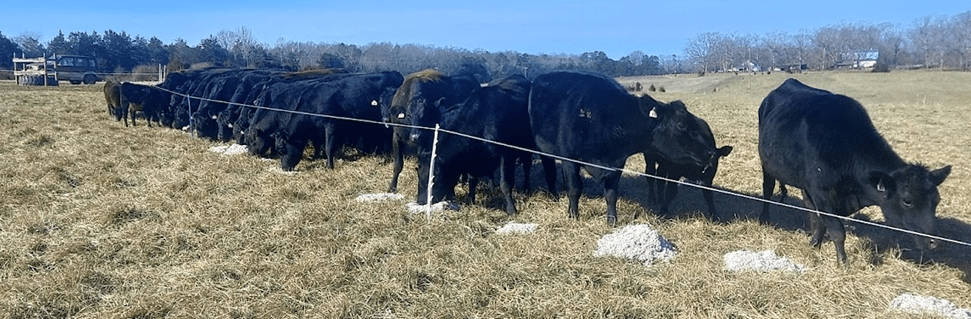
We just got the results of our preg test back, and we had 74% pregnant to the first AI, and another 11% (all three) on the rebreed, for a total of 85% bred. That is by far the best we have done, and it is likely at least partially due to the fact that we removed these heifers from fescue toxins by grazing on Novel Endophyte Tall Fescue and then providing Novel Endophyte Tall Fescue hay for a month before and after breeding. Now I am excited to get the DNA tests back to help us decide which heifers to keep and which to sell, and also to understand which traits we need to work on.
Renovating pastures to Novel Endophtye Tall Fescue has been another game changer for us. We finish many of our cattle, and in the past have used a lot of feed to get the high quality kind of beef we are trying to raise. As I age, carrying feed is not as easy as it once was, so I am really wanting to get as much performance out of the grass as possible. Our goal is to get enough novel endophyte tall fescue to run all our finishers and replacement heifers and not need much feed. We already have eliminated most of the feed from our heifer development program, as the heifers stay off toxic tall fescue from several months before breeding until they wean their first calves.
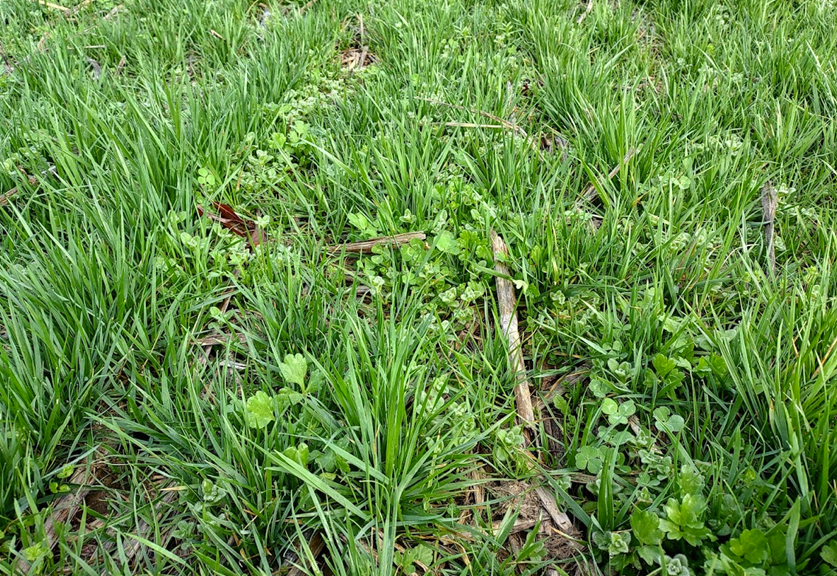
After a brutally cold month last month, much of March so far has been on the warm side, with even a few hot days in the 80s. This has really perked up the grass, and the new plantings of Novel Endophyte Tall Fescue are looking much better. There are a lot of weeds in these stands, mostly buttercup, deadnettle, henbit and other annuals, so we decided to spray Weedmaster when the weather warmed up to help those stands thrive.
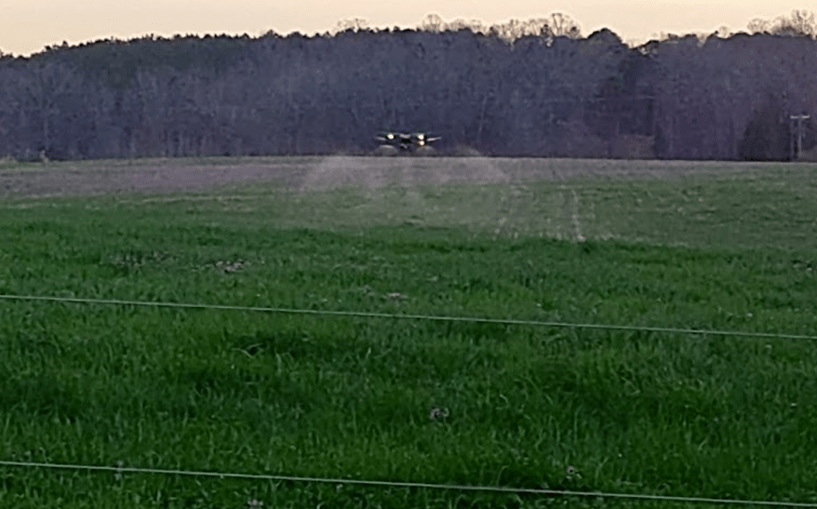
I was visiting with my friend Preston Cave of PAC Aerial Applications, LLC at the NC Cattlemen’s Association Meeting in February and he mentioned he would be down our way in March and would have some time to spray some pastures. A couple of us went together to make it worth his trip, and we were scheduled for this week. Preston is a young entrepreneur who has found a great opportunity doing custom spraying and seeding by drone. This technology has only been around for a short time, but it is rapidly being adopted across agriculture.
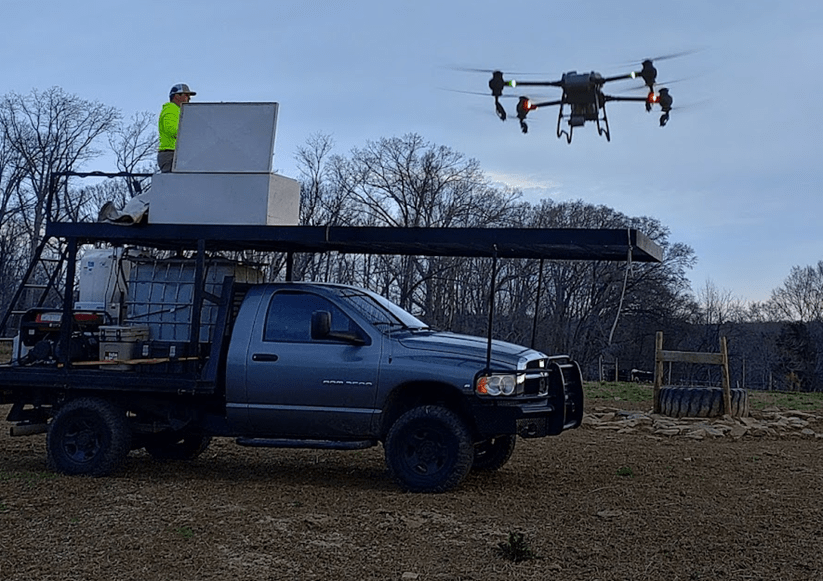
Preston arrived at daylight on the day we were scheduled so we could finish before any wind came up. It was amazing to watch and almost like science fiction to me. After manually flying the perimeter the drone maps the field and knows what to do to completely cover the area. We had 38 acres to spray in 3 locations, and within 3 hours Preston was packed up and headed for the next farm. This is technology that is really going to impact us all as it dramatically improves opportunities to get custom application done.
As you encounter new technology don’t drag your feet too long in trying some of it. It is good to be skeptical and you should beware of things that seem to be too easy like a mineral or a certain feed that will solve all your problems, or that sound too good to be true (like most remedies for fescue toxicosis). If you have opportunities to upgrade your pastures and your livestock in ways that will last then give these things a try. Carefully evaluate your results, adapt, and evolve a system that makes technology work for you.
~ Dr. Matt Poore, NC State and the Alliance for Grassland Renewal.
The Alliance for Grassland Renewal is a national organization focused on enhancing the appropriate adoption of novel endophyte tall fescue technology through education, incentives, self-regulation and promotion. For more resources or to learn more about the Alliance for Grassland Renewal, go to www.grasslandrenewal.org
 The Alliance for Grassland Renewal