We have had a very odd start to the grazing season. The roller coaster ride of temperatures for the last two months has really hurt productivity of the perennial cool season grasses. The fields we fertilized early came out and grew in March, only to be set back by a 23° F freeze. This turned that grass brown on the tips and it is still that way today. The annuals have fared better with the temperatures, but they are severely impacted by the late planting date and slow early development (due to drought last fall) and the shortage of moisture over the last 6 weeks. It has been plenty warm to germinate the clover seedbank, but we have been very limited on surface moisture since late February.
We started back on grass first with the yearling heifers we had artificially bred and the first calf heifers. These two groups have the highest nutritional requirements, so they get the first shot at good grass. The bred heifers started on a mix of oats and ryegrass planted along the front of the farm. When they finished the first half of this (which was the early planted part) we shifted over to novel endophyte tall fescue, and they have enough of that for about 4 weeks.
The first calf heifers have all AI produced calves, and they are really growing fast. These girls were put on some Martin 2 with Protek novel endophyte tall fescue first, and then went to some Cosaque Black Oats with some really great quality. They loved this, but it was just a weeks worth, and from there we moved over to a KY31 field we had used for bale grazing. This field does have a lot of tall fescue, but what came out early was mostly ryegrass, bluegrass, and a variety of other species. We just topped over this and then moved on to an old stand of MaxQ Tall Fescue we have been grazing now for about 20 years. Both these groups of cattle are gaining weight and body condition fast, and have enough grass ahead of them for at least 3 weeks.
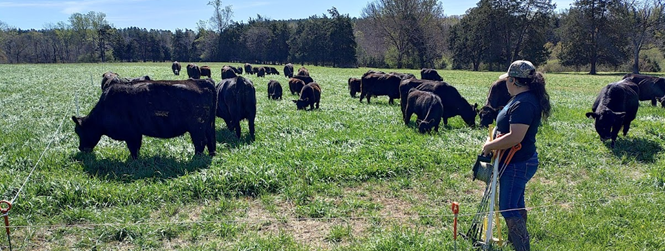
We moved half the finishers to our other farm, Pleasant Hills, and there is abundant grass there, so we are moving them fast to encourage them to eat off the boot stage seedheads of the tall fescue. The other half of the yearlings and the mature cow herd are also being moved fast to get them to clip seedheads.
This time of year there is always a debate about whether you should turn out early or late. The thinking is if you turn out too early and end up overgrazing it will set the grass back for the whole year. On the other hand if you turn out early and move fast around the farm, you can get off hay earlier, and a lot of unwanted seedhead production can be avoided. This will result in better grass later on, and also a savings on fuel needed to clip the seedheads off later (which is a critical step in toxic tall fescue management). Of course you don’t have to clip novel endophyte tall fescue pastures to control toxicosis, but you still might want to for the improved forage quality.
We turned out the finishers that stayed home on a three year-old stand originally planted to Jesup MaxQII. This was a somewhat poor stand in it’s first year, and last year we have been very challenged with crabgrass encroachment. We drilled over this last spring with orchardgrass and Estancia plus ArkShield tall fescue and went the other direction with the drill rows. It looked good early last summer, but looking at the open spaces today, it is clear that the spring seeding was pretty much a failure. This fall we will drill more orchardgrass and clovers into this stand after we get the crabgrass out of the way, and maybe this will be more successful. We are moving the cattle fast so they will leave at least 6 inches of stubble, and we expect they will start to slick off soon.
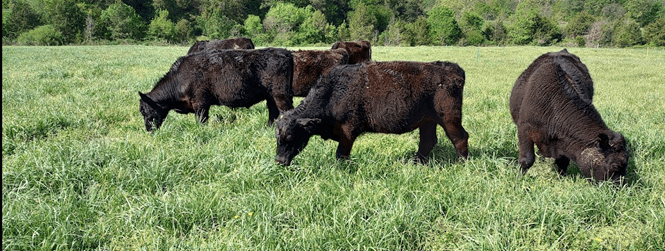
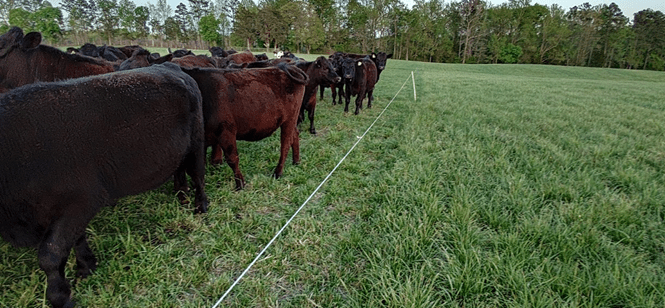
The mature cow herd is moving around the back half of the farm. We continued to use bale grazing on this group putting out about 3 days of hay at a time, waiting for that critical turnout day. We turned out on April 7, and figure we have about 3 weeks to get all the way around the back of the farm. This group is getting very large sections each day, and they are doing a good job only taking the taller plants which are mostly toxic tall fescue and orchardgrass.
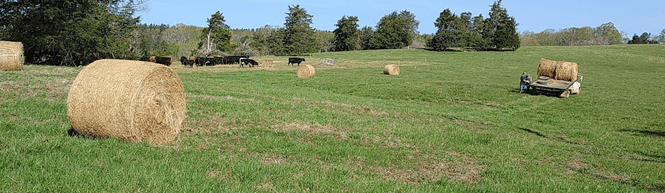
I don’t want to end on a negative note, but we are all aware of the proverbial “Elephant in the Room”. I have never seen it this dry and with this little growth on the pastures in mid-April. We are now firmly in stage 2 drought, and those conditions are all across the region. We had a dry April last year as well, but looking back at photos shows a stark contrast with this year. There is talk about an El Niño and wetter weather ahead, but today we are looking at mid-90s and windy this week without any rain in the forecast.
I have learned not to sit and waste energy worrying about when it will finally rain, but rather to focus on what it takes to survive through a drought. Our plan is to; 1) cut some oat and ryegrass hay that has enough growth to justify cutting now, 2) move the cattle groups fast and graze the pastures to leave at least 6 inches of residue, 3) get ready to plant our crabgrass as soon as moisture is available, and 4) prepare to pull back in and feed hay as soon as we finish the first grazing cycle. This week I will also spend some time calling hay suppliers and starting to buy what is left of last-years hay. I certainly hope it doesn’t come to that, but now is the time to be thinking about it. Make your own plans, but whatever you do don’t overgraze your pastures as this will lead to very poor production even when it does finally rain.
~ Matt Poore, NC State and the Alliance for Grassland Renewal
The Alliance for Grassland Renewal is a national organization focused on enhancing the appropriate adoption of novel endophyte tall fescue technology through education, incentives, self-regulation and promotion. For more resources or to learn more about the Alliance for Grassland Renewal, go to www.grasslandrenewal.org

