It is no surprise to anyone that the drought has persisted across much of the tall fescue belt. Since I wrote last month we had one wet system that moved across the Southeastern US, bringing significant relief to Mississippi and Alabama, but only bringing spotty help to the rest of the region. In North Carolina and Virginia we had a mixed bag with 4 to 6 inches many places in the mountains, but only 0 to 2 inches in the Piedmont and Coastal Plain. It was nice that most folks got at least a little rain, but with a 15 to 20 inch deficit on the year, it will take a lot more to turn things around.
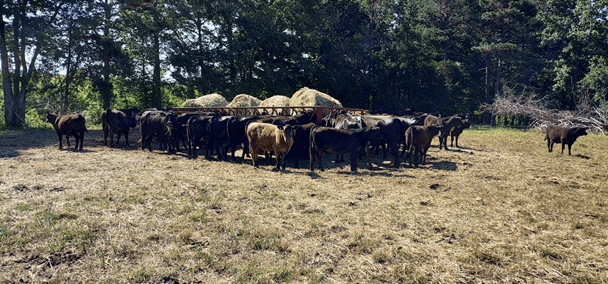
Once we completed our first cycle around the mature cow pastures we put the herd in a sacrifice area and started feeding oat hay out of hay trailers. We have not used these hay trailers in years, but this is the one situation where they do make sense. The cows really enjoyed this high quality hay, and after 2 weeks started looking a lot better, being relieved of the toxins from toxic endophyte infected tall fescue.
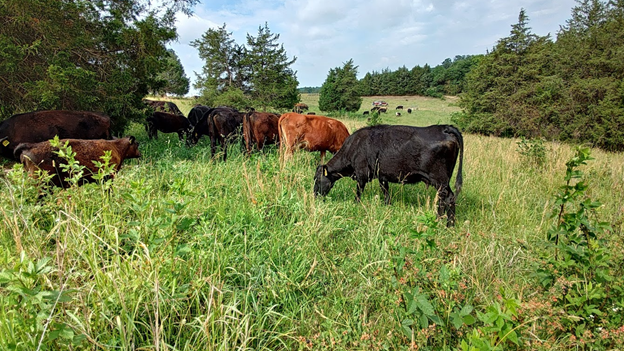
We were fortunate to get 2 inches of rain from that wet system the last week of May, which brought our total for the month to 2.3 inches. Better than March or April, but still half of our normal. When this rain came we were about fed through the oat hay. The rain greened things up, so we started back out on pastures that had been resting 6 weeks, but which have only about 10 to 12 inches of growth. These pastures have a lot of warm-season species that naturally occur including purple top, dallisgrass, and various forbes like hemp dogbane and red root (smooth) pigweed. These warm season plants are very visible as they responded to the moisture and are growing while the cool season species are pretty much dormant. We are about ½ way around the second rotation and it looks like we will get about 3 weeks, so we have about 10 days left ahead of us.
As I mentioned last month, drought is a really hard thing for a farmer to face as there are many unknowns, and there also are haunting memories of the last time we were in a big one. I am feeling a bit better this week as I am getting past hope that it will rain a lot soon and everything will be fine. Instead, am entering a phase of realism where I know it is going to be a long haul and that I need to get into action and develop a plan to keep from losing everything.
Before we started feeding hay we ran the cows through the working pen to give the calves a vaccine for blackleg, and to “grade” our cows. We assigned a score of 1 to 4 to each cow. The 1s are cows of highest value that we will keep if at all possible. The 2s are cows that are middle age, and have no major flaws. They are cows we would gladly sell to a friend or neighbor. The 3s are cows we probably should sell that have some kind of defect including foot, udder or other issues, but that still raise a good calf. The 4s are cows that have to go in any year including some old cows, some with very poor calves, and of course open cows.
Our plan when we finish the current cycle is to go back on hay until we can get the #3 and 4 cows sold at the local sale barn, and then we will wean the calves. After a couple of weeks weaning we will sell the bottom half of the calves, and in the process reduce the number of finishers we will have available in ’27-28. We will keep the best of the heifers and breed 25 head as we normally do. If things continue like this we will also sell some or all of the #2 cows, making sure they don’t go to slaughter as the beef industry needs to find a good home for every good cow out there!
I went to the FSA office last week to get our application in for the Livestock Forage Program. I mentioned this program before, and if you don’t know about it I strongly encourage you to study up and get your application in if you are eligible. This influx of cash, while not much, will help us to start building up a feed supply for the coming drought months and for next winter. There is very little hay for sale around us, so we are reaching out to areas that did receive some rain and which grow bermudagrass. The cost of freight will be high, but it will be good to have at least some here on the farm in storage.
We also are looking at other alternative feeds. We have fed cotton textile mill waste in the past, but that is not available like it used to be. We have an opportunity to get some Cotton Gin Byproduct which can also make a pretty good hay replacer for brood cows. We usually buy a load of whole cottonseed in November, but there is still some available from last year’s crop so we will go ahead and get that put in as well so we have it when we need it. We usually use whole cottonseed as a supplement, but we can also use it as a hay replacer when necessary. We also feed corn gluten feed and soybean hulls as our main concentrate supplement, and we can increase the amount of that we use, although it is an expensive source of energy and protein compared to pasture.
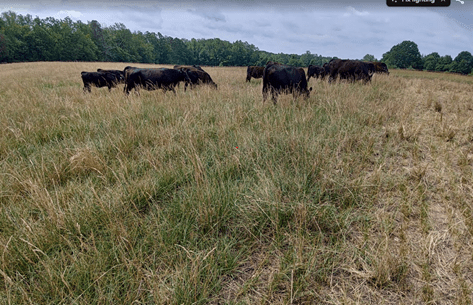
We have continued to graze our better pastures with the young cattle. The bred heifers and the yearling finishers have been enjoying novel endophyte tall fescue and what is left of the winter annuals. I have been very impressed with our first year stands of novel endophyte tall fescue which look better than I can believe given the lack of rain ever since they were planted last fall. We have 8 acres of Lacefield MaxQII we are grazing with the first calf heifers, and they and their calves look really great.
We deferred grazing these fields earlier in the spring, and decided that we would wait until we had at least one inch of rain in the same week. We finally had that, so we started across these fields. We are trying to go as easy on the grass as we can, but the reality is that we can’t not graze good standing forage right now. If we do damage these stands we will learn a lesson, but I am pretty confident they will survive if we don’t graze too short, and if we get some rain along.
I know many of our readers that have cows are in the same situation we are in. If you have cows and had good rain over the last month I am sure you are at least empathetic about our situation. Most folks that don’t have cows don’t really understand what a big problem this is. I know many without cows will wonder why anyone would want cows in the first place if this can happen. I don’t know how to address that. It does seem like there are always good reasons for us to exit the cow business, but we seem to do anything we possibly can to keep at it.
Like many in our industry we will continue to do what we can to manage this most recent crisis and keep our cows. Rather than finding some other way to spend our time and energy, we will persevere and look forward to rain, green grass, healthy cattle, and the knowledge that we can endure almost anything with the right attitude.
~ Matt Poore, NC state and the Alliance for Grassland Renewal
The Alliance for Grassland Renewal is a national organization focused on enhancing the appropriate adoption of novel endophyte tall fescue technology through education, incentives, self-regulation and promotion. For more resources or to learn more about the Alliance for Grassland Renewal, go to www.grasslandrenewal.org

