
This is a preview of an article written for the Amazing Grazing Column, Carolina Cattle Connection, August, 2026
As we continue to suffer the impacts of drought across the southeast region it is a good time to think about how you might improve your system for producing and utilizing forages. Your home-grown forages are the base for profitable beef production, especially at the cow/calf level. Efficiently growing forages and getting most of the production down the throat of a cow is of critical importance to dealing with natural variation in growing conditions.
How you might improve your system to make it more resilient will depend on what you already have, and what intensity of grazing management you currently use. First, lets consider improving the diversity of forage species used.
In most of the Carolinas beef cows will be maintained on a cool-season base, usually Kentucky-31 Tall Fescue. This is a really tough plant, but it has two major shortcomings. First, it contains toxins that reduce dry matter intake and growth rate in beef cows and their offspring. There are also other influences of the toxins including poor circulation of blood to the reproductive tract, reducing the level of nutrition the unborn calf receives, and dramatically increasing the impact of heat stress on cow comfort.
Additionally, Kentucky-31 tall fescue is a cool-season plant, so it prefers the environmental conditions in spring and fall, with only slow growth in summer. If you have a lot of rainfall then it may grow pretty well through the summer, but when it turns dry it goes semidormant and waits for cooler weather to take off again.
As you think about how you can improve your system, consider converting some of the toxic KY-31 to Novel Endophtye Tall Fescue (which is non-toxic). Also consider converting some to a warm-season grass, either a native species like switchgrass, or introduced species like bermudagrass or bahiagrass. A system I really like for the Piedmont is70% tall fescue, and 30% warm-season grass. Of course, the ideal mix will depend on your land and your management, and how susceptible you are to fescue toxicosis problems.
There has been a lot of interest in the native warm-season grasses in recent years, in part because of their low need for added fertility and in part for their summer production. Many farmers have seen success with switchgrass, big bluestem, Indiangrass and gammagrass. All of these require considerable management to establish, but stands can last many years, and they are very deep rooted and drought tolerant. These species are sensitive to continuous heavy grazing, so keep that in mind; they require a high level of grazing management to persist.
As you consider warm-season forage options don’t forget about bahiagrass and bermudagrass. Like native warm-season grasses bahiagrass requires low levels of fertility, and it also tolerates a lower level of grazing management to keep stands healthy.
If you have a lot of nitrogen and other nutrients available (such as from poultry litter or other manure nutrient source) then consider bermudagrass. It is highly productive and will potentially produce more than any other species of grass we have available as long as you feed it nutrients. Bermudagrass is especially productive on land with a higher sand content. Establishing any of the warm-season perennial options is challenging and slow, but once they are established they provide a real advantage in hot weather because they use water more efficiently.
Strategic use of warm season annuals including improved crabgrass, sorghum-sudan, millet or cowpeas in summer, and ryegrass, small grains, or cool-season annual legumes in winter is a good way to plug some holes expected in the forage system. With typical conditions, many forage specialists recommend no more than 10-20% annuals in any system.
If you are in the Coastal Plain then you may have the opposite problem; to much dependence on bermudagrass, with little production for ½ the year. Part of the bermudagrass acres in these systems are typically overseeded with a winter annual like ryegrass or small grains to extend the grazing season. This makes a great system, but when it is dry in autumn, the winter annuals will not be very productive, so that they will primarily provide grazing starting only in late spring.
Because of the unpredictability of annuals, these systems would benefit from a perennial species with a longer and more predictable forage season. If you have some heavy land where bermudagrass does not excel, then planting some tall fescue might benefit you. If you only plan to graze the fescue during the cool season then Kentucky-31 might work, but we would usually recommend one of the Novel Endophyte Tall Fescues which will perform as well (with moderate management), while not causing any toxicosis problems.
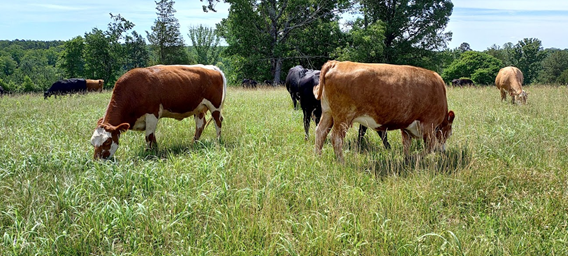
As I wrote earlier, bermudagrass really needs a high level of fertility to persist and remain productive. If you have thinning bermudagrass stands, then it is possibly due to low fertility, with potassium often being the limiting nutrient. If you don’t have the inexpensive fertility to maintain these bermudagrass stands, consider renovating to bahiagrass which will need lower fertility inputs, and likely will be more productive than bermudagrass on heavy soils.
Modifying the species in your production system is powerful, but it is expensive and takes a number of years to implement. The second major thing to consider in developing a more resilient forage system is to improve your grazing management. Nearly all plants (even bermudagrass) will do better if they are allowed to rest between grazing bouts. Additionally, the more intensive the grazing management the more of the forage you grow goes in the cow. With continuous grazing only about ½ of the forage is consumed, whereas with a rotational system it is more like 75%.
Many of our farmers are currently overstocked due to the high price of cattle. This is a real problem when the weather turns dry and pastures don’t grow. Implementing a rotational grazing system has the potential to turn an overstocked farm into an understocked farm. If you have considered improving your grazing management system now is a great time to start as you will help the plants survive the current drought, improve the productivity of the pasture next year, and tame the cattle considerably, improving their overall production.
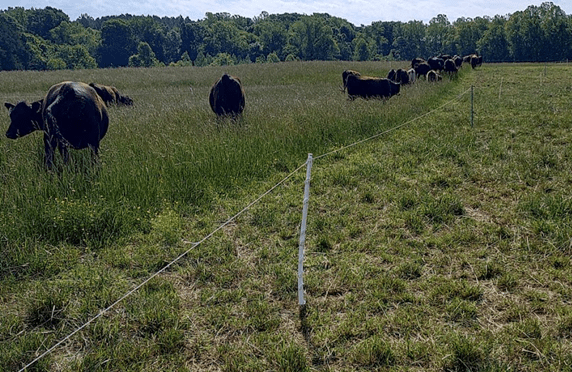
Many farmers shy away from improving their grazing management because they perceive it will take a lot of extra work with minimal benefits. First, the benefits are huge, so don’t ignore them. Like anything worth doing, stepping up your grazing management does take some effort, but it is great exercise and gets you out with the cows more, which is what most of us are after anyway.
Once you get past the mental barriers and start dividing large pastures that first time, you will see the benefits and you will be hooked. It is pretty simple to make that first pasture division, and once you get started you can intensify your management to the level that fits your abilities and lifestyle. Explore the use of temporary fence and you will discover “The Power of One Wire”. To learn more just search on The Power of One Wire for Beef Cattle.
~ Matt Poore, NC State and the Alliance for Grassland Renewal
The Alliance for Grassland Renewal is a national organization focused on enhancing the appropriate adoption of novel endophyte tall fescue technology through education, incentives, self-regulation and promotion. For more resources or to learn more about the Alliance for Grassland Renewal, go to www.grasslandrenewal.org

