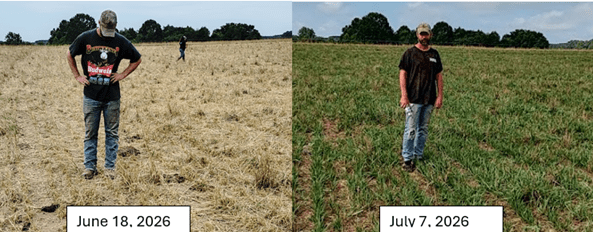
It finally rained enough to make a difference for us! Late in May we had 2 inches of rain, and that was followed by several good thunderstorms starting mid-June, such that we ended up with a total of 4.3 inches for the month. This was the wettest month we have seen since last summer. Thankfully this moisture was regular enough to keep the surface layers moist most of the month. Being able to string together these rains is a game changer for our situation. The streams are still bone dry, but at least we have a little green out there on the land.
When I wrote in June we were looking at resuming hay feeding in less than two weeks. With the continued moisture, the pastures grew more than we projected. We were not all the way around our cycle when we came to the time we planned on selling a load of cows. We were near the central lane, so we ran the herd to the working pens and separated those cows on Sunday afternoon for shipping on Monday morning. We left their calves with the herd, knowing we would be weaning all the calves in a few weeks.
We usually sell our cull cows a month or so after weaning so that they can gain back some condition to improve their market value. This year we don’t have the feed for that, and we learned a bit of a lesson. Four of those cows jumped a polywire and broke down the gate to the lane, so that when Brandon and Tina arrived (early) to load they were all the way back where the herd (and their calves) were! Fortunately their calves had ducked under the wire and got with them, so they stayed in the lane. Brandon and Tina had them back up and sorted by the time I arrived!
After another 10 days to finish up the remaining grass, we gathered the herd again and separated the calves for weaning. We plant the weaning field with a mix of Quick-N-Big Spreader and Dal’s Big River Crabgrass, so with the rain there is good grazing for the calves. The cows graze a tall fescue field adjacent to the weaning field that has been stockpiled with all the spring growth up to that point. This year there is not much grass there yet, so for the cows we combined giving a strip of grass with hay feeding. We did this two days before I left for a week of vacation on a mountaintop in Arizona over the July 4th holiday.
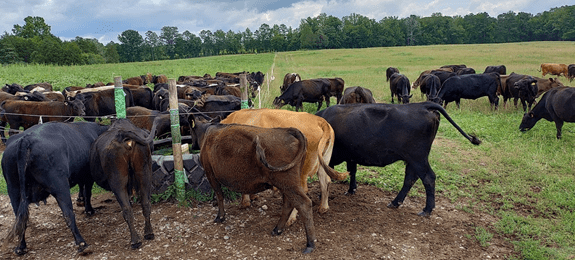
This fenceline weaning system has worked well for us, but usually is not without some trouble. This year all seemed well before I left town, but on the 4th day after separation there apparently was crowding around the corner water source and some of the calves broke the polywire down. I hate I missed it, but it only took a short time for Tina and Brandon to get them in the pen and resorted. By the time I found out about the incident it wasn’t a problem anymore. The next step will be to weigh those calves, give a booster shot for blackleg (7-way), and decide which to sell.
While it has been comforting to have some rain, we can’t forget that we are still in D3 drought with a long way to go to next spring. However, with a system with good soil health and a lot of plant diversity, (including warm season species), just a few good rains make a big difference. This past week we had an extreme heat wave, but the earlier moisture has allowed us to still be looking pretty good. Our crabgrass plantings grew to waist high with the June rains, and even though we didn’t get the weeds sprayed this year in those plantings (due to a broken sprayer), this bit of effort provided a lot of high quality grazing that continued to grow our weaned calves, replacement heifers and finishers well.
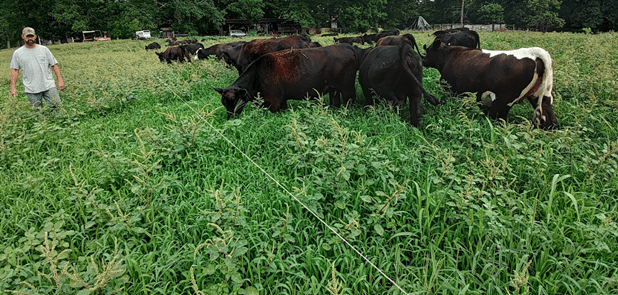
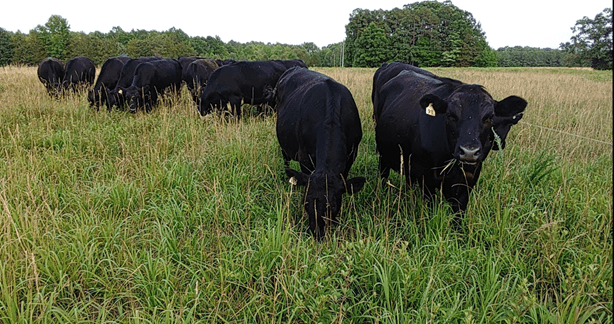
At our North Carolina location our 30 finishers continue to enjoy a smorgasbord of warm-and cool-season grasses, legumes and non-leguminous forbes. These cattle are very slick and have performed better this year than ever before. The old timers will tell you that cattle gains on pasture are best when it is dry, assuming there is enough rain to keep plenty of grass ahead of the cattle, and it is very true. This year it was too dry even for tall fescue to grow much (with very few seedheads) and these cattle show no signs of fescue toxicosis.
Finally, we finished grazing the first-year stands of novel endophyte tall fescue that were planted last October. These grew better than you would expect, and we waited to graze until early June when we had some moisture. It continued to be very dry and hot for the first half of June, and the fescue turned brown after we grazed it, making me fear for our stands. However, after the rains in the last half of June these pastures snapped back in dramatic fashion. Now, we have some annual weeds (pigweed primarily) that will need to be sprayed, but the stands seem to be alive and well.
I am writing this while returning from a week of badly needed vacation. Sometimes it helps to get away from the situation and think about other things for a change. I am glad I am returning to a plan to reduce our feed demand over the next year, identify and purchase the hay and other feeds needed to get the remaining cattle through next winter, and continue to produce high quality beef with finishers due for delivery starting in October.
There are many moving parts, but making a plan and then adapting to the constantly changing situation is a powerful approach. Having that drought response plan in place allowed me to get some real peace of mind this past week, and I am optimistic that our long-term goal of producing high quality finished beef, while improving our resilience to drought and other challenges is still on track!
~ Matt Poore, NC State and the Alliance for Grassland Renewal
The Alliance for Grassland Renewal is a national organization focused on enhancing the appropriate adoption of novel endophyte tall fescue technology through education, incentives, self-regulation and promotion. For more resources or to learn more about the Alliance for Grassland Renewal, go to www.grasslandrenewal.org

