This year has been really tough for us, dominated by serious drought punctuated with brief periods of hope. The drought started last September, and we had month after month of very dry weather. Spring came, but was short lived with virtually no rain in April or May to grow grass. We have never fed hay in May before, but we did this year! We had good rains in June that started to improve things, and when I wrote in July I was feeling some hope as I knew we had some grass growing.
Unfortunately, as July wore on, we were in for record hot days with no rain. By the end of the month the rain total was 1.2”, mostly from small events that dried back out by the next day. Once our calves were weaned and we cleaned up areas in the Middle Field that had been stockpiling for several months we moved the mature cow herd to the back pastures. This area had been resting from one to two months, so with the rain we had accumulated some warm season grasses and forbes. As of today we continue to rotate the herd around the back and they are rapidly gaining body condition. We have three weeks of grass ahead of us for this group.
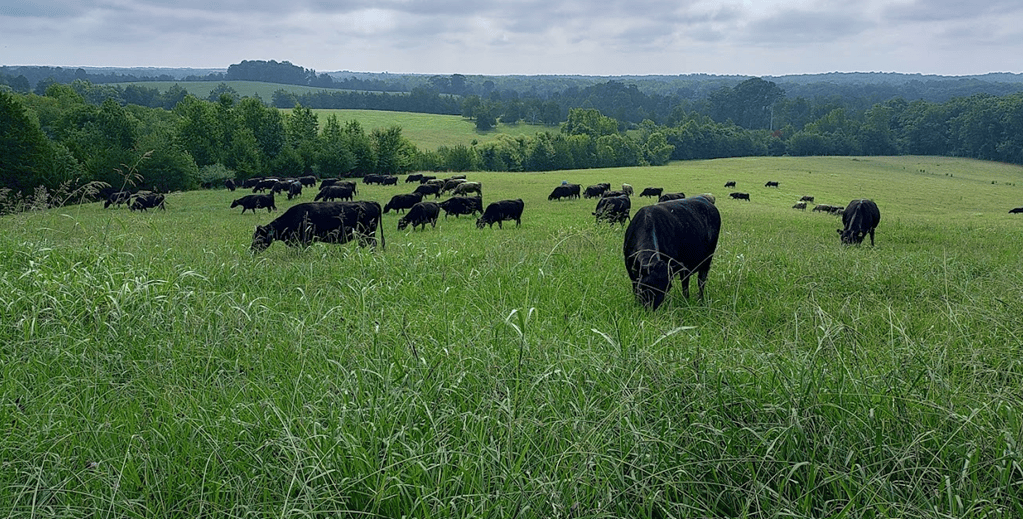
Because of the unusual year the grass is actually much higher in quality than it normally is in early August. This bodes well for cow body condition at calving, and the nutrition of those fetal calves that are enjoying riding around in their moms taking part in the good grass.
We continue to run our bred heifer/finisher group in our front field which is split between novel endophyte tall fescue and a crabgrass/johnsongrass stand. The summer grass side grew a lot of Johnsongrass, but only produced some pretty sparse and short crabgrass. As it turned out the cattle really enjoyed the Johnsongrass and we could see them gaining body condition almost daily. We have grazed through and clipped that pasture, and now if we can just get a rainy day we will put some nitrogen on it to stimulate some additional growth.
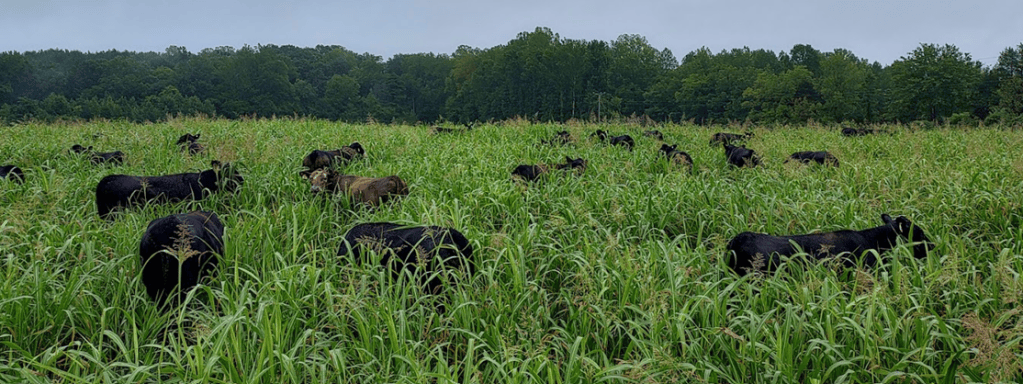
Our finishers at Pleasant Hills Farm, 6 miles south in Granville County, NC, have especially good grass now. About half of this farm is dominated by pastures that have some tall fescue, but mostly dallisgrass by this time of year. The last two years we had a lot of summer rain and this dallisgrass got very rank with ergot in the seedheads, so we had to clip it high before grazing. This prevented the staggers problem you can have with dallisgrass, but the quality of the resulting feed was not very good. This year the growth has been delayed, so it is still relatively “young”. Also, there is no sign of any ergot in the seedheads, a problem that usually occurs in wet and humid conditions. These cattle are eating all the dallisgrass seedheads and leaves, and also nibbling at the tall fescue and other plants.
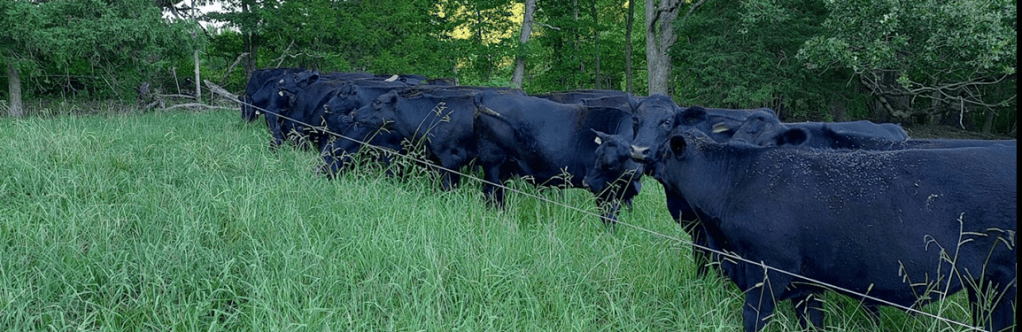
While there has been a lot of drought relief in North Carolina, the region right along the Virginia border where we are remains in D3 drought. We have neighbors just 20 miles south of us that had more than 10 inches of rain in July! It is hard on morale when you see those major storms on the radar coming, only to split and go north and south of us. I know there are times when everybody feels like that, but this year it has been an especially heartbreaking reality for us!
I know someday we will get our rain, and I am confident that when we do we will grow a lot of grass. In the meantime, we are continuing on with our drought management plan. We sold1/3 of our calves, and plan on reducing our finishing numbers for 2027 by 25 head. We also have identified bred heifers and cows to sell to bring our calving cow number to 100, down from our normal 110. If we don’t start getting rain this month we will reduce that number further before calves start coming in October.
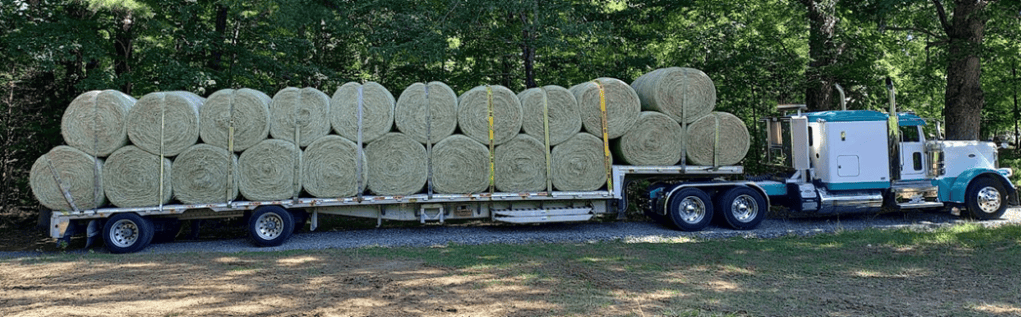
We continue to build our hay supply for winter with hay purchased from southeast of us where it has rained. We have purchased mostly bermudagrass hay, and the quality has been very good. It is adding up to a lot more per ton than we are used to paying, but we will be happy to have it when winter arrives!
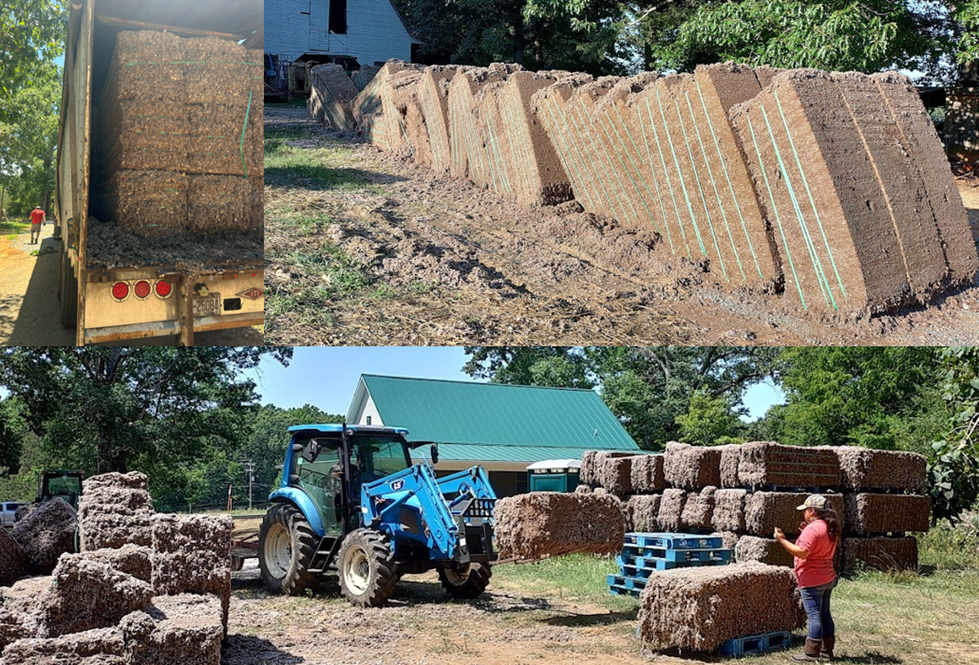
We also decided to buy a load of cotton gin byproduct to help build out the feed inventory. This material makes a good cow feed, with about the value of medium quality hay. Cows will really eat it, so while it is low in digestibility, it has plenty of protein and with a high intake they actually do pretty well on it. The problem is handling it, and we learned a lot just dealing with that first load.
The material comes in 700 lb bales, and they are usually hauled in a walking floor truck. As they come out of the truck they fall and hit the ground. This can be a disaster if the bales bust, as they blow up into a lot of volume that is really hard to handle. I was not there unloading, but Brandon figured out how to get them to drop it so that few bales busted. We stacked two bales on a plastic pallet and then put them in one large stack. When we feed, we will be able to take them 2 bales at a time off the stack and load on our flatbed truck with pallet forks. We will feed it in combination with hay for the mature cows.
It has been an active and rewarding month, but I am ready for a lengthy wet spell. The fact that it has been raining all around us is a good thing and I know that at some point we will get our share. For now, all we can do is to hold on for the ride and make the most of what comes our way.
~ Matt Poore, NC State and the Alliance for Grassland Renewal
The Alliance for Grassland Renewal is a national organization focused on enhancing the appropriate adoption of novel endophyte tall fescue technology through education, incentives, self-regulation and promotion. For more resources or to learn more about the Alliance for Grassland Renewal, go to www.grasslandrenewal.org

