Is the nutritional composition of beef better or worse when cattle are raised and fed on pasture versus those fed grain in a feedlot? Could a difference in beef composition be connected with soil health and the diversity of plants they eat? These were questions posed by a research team at Duke University, NC State University, and Utah State University in a project funded by the USDA-SARE (Sustainable Agriculture Research and Education) program. The work was recently published in the journal “Science of Food” (Ahsin et al., 2025).
Beef quality was characterized from three grass-fed cattle operations (one in Alabama and two in North Carolina) and a grain-fed feedlot system in the Midwest, a common location for large feedlots. Beef cuts, pasture forages, feedlot TMRs and soil were analyzed with metabolomics, a technique that allows scientists to measure many different chemical compounds in a sample at once.
Compared with adjacent croplands producing corn, pasture soils had greater organic matter and higher levels of several minerals, including calcium, potassium, and zinc. Pasture plants also contained substantially more phytochemicals that have antioxidant qualities compared to the total mixed ration of the feedlot.
Diet differences were reflected in the beef. Grass-fed beef contained:
- 3 times more phytochemicals and their metabolites
- 4 times more vitamin E
- 3 times more vitamin A (retinol)
- Greater quantities of omega-3 fatty-acids, including EPA and DHA
- More antioxidant compounds
Grain-fed beef, meanwhile, had higher levels of compounds associated with oxidative stress, including homocysteine and 4-hydroxynonenal glutathione. This suggests metabolic health was compromised.
What does this mean to the general public and beef producers?
What cattle eat influences beef nutritional quality. Cattle consuming a diversity of fresh forages derive benefits from a variety of natural plant compounds compared to cattle fed a grain-based total mixed ration. The phytochemical compounds in forages are detected in the meat. Many of these compounds are also what gives grass-fed beef its more complex flavor.
This study also suggests a larger ecosystem connection: Healthy soil under well-managed pastures leads to diverse, nutrient-rich plants producing beneficial phytochemical compounds consumed by cattle. This improves animal health and in turn beneficially impacts the nutritional composition of the beef.
However, it’s important not to interpret this study as proving that eating grass-fed beef will make people healthier. In this study we measured differences in soil, feed, and beef; we did not conduct a human clinical trial showing that people who eat this beef experience better health outcomes. Studies focused on that outcome are underway. Previous research has concluded that consumption of feedlot beef can be part of a healthy diet. Our study indicates there may even be additional health benefits from eating grass-fed meats.
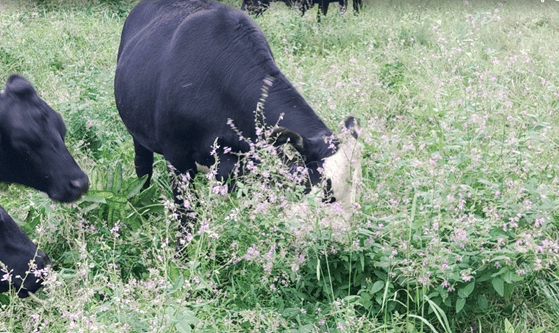
There are also limitations to this kind of study. Only three grass-fed farms were studied and one feedlot. Also, the number of beef samples analyzed was limited. While all studies have limitations, this work, along with the work of others, supports the idea that finishing cattle on pasture with diverse plant species can produce beef with added nutritional value compared to feedlot beef.
The full paper can be found here: https://www.nature.com/articles/s41538-025-00471-2#Sec1
A podcast featuring Dr. Stephan Van Vliet and Dr. Allen Williams discussing the study can be found here: https://youtu.be/nSLeuUdvtfA?si=9AQPH0_kUQok8URS
1Matt Poore is a Professor of Animal Science at North Carolina State University, Alan Franzluebbers is a Research Ecologist with the USDA-Agricultural Research Service, and Stephan Van Vliet is an Assistant Professor of Nutrition Science at Utah State University.
Ahsin, M., Poore, M. H., Rogers, J., Franzluebbers, A., Young, S. N., Kronberg, S. L., Provenza F. G, Bain, J. D., van Vliet, S. 2025. Soil and pasture health underlie improved beef nutrient density determined by untargeted metabolomics in Southern US grass finished beef systems. Npj Science of Food, Vol. 9. https://doi.org/10.1038/s41538-025-00471-2
~ Matt Poore, Alan Franzluebbers, and Stephan Van Vliet1
The Alliance for Grassland Renewal is a national organization focused on enhancing the appropriate adoption of novel endophyte tall fescue technology through education, incentives, self-regulation and promotion. For more resources or to learn more about the Alliance for Grassland Renewal, go to www.grasslandrenewal.org

