
There is great interest in Regenerative Agriculture, and under that big umbrella, our piece: Regenerative Grazing Management. Young farmers and “new and beginning” farmers are especially attracted to the concept. It is no surprise, because as you look at various websites and social media the promise is of dramatically improved economic return, better health for livestock and farmers, and enhanced environmental benefits.
Unfortunately, it is not as simple as many would suggest, and it is not a completely new concept. Good grazing management is based on several clearly defined principles. These include 1) keep grazing bouts short with long rest periods, 2) maintain a minimum grazing height before moving, and 3) avoid overgrazing. Scientists call it managing grazing intensity and duration.
The “new” with Regenerative Grazing Management comes with the general outlook of the farmer. To be “Regenerative” in your thinking you need to realize that most if not all of our agricultural soils are in a state of reduced function compared to the undisturbed soils our ancestors found many years ago. After several decades or even centuries of heavy tillage, many of our soils were reduced to a sterile growing media, nearly devoid of organic matter, nutrients and biological life.
The situation of course depends on where you live and what soils you farm. Where I grew up, in the Piedmont of Virginia and North Carolina, by the 1940s many farmers were literally starving because their land had lost most of its ability to produce. The introduction of key chemical agricultural inputs after WWII “saved the day”, and restored the farmer’s ability to make a crop.
Unfortunately, given the soil had lost its own superpower to support plants, the next crop became dependent on the use of those external inputs. The idea was to use fertilizers to feed the plants, and to use herbicides and insecticides to ward off an invasion of undesirable species. These “weeds” and “pests” could jump on a crop and quickly destroy it because they had lost the natural ability of the soil and the broader ecosystem to control them. With clever management including extensive scouting, soil and tissue testing, the appropriate inputs allow the farmer to make huge yields, and occasionally make some money when commodity prices are high.
Regenerative Grazing Management has the goal of restoring the inherent productivity of the land. But, to do that you must tell yourself that your soils are degraded and that you have the power through your management to make them better. Once you are in that mindset, you can start applying the concepts of grazing management in a way that best fits your context. As you do, observing the outcomes of your management system and looking for improvement will be rewarding and will help you learn how to continuously improve your system.
One of the most important things you can do is to learn how to apply the principles of Soil Health. Soil health is the inherent ability of the soil to support efficient plant production. When soil health is low, there are few nutrients cycling and natural control of pests is limited, so inputs are needed to get good production. When soil health is high, there is a high level of nutrient cycling, and weeds and pests are controlled naturally. Most of these factors are directly related to the level of organic matter in your soils. Organic matter feeds soil biology, improves water infiltration and water holding capacity, and provides mineral nutrients as it breaks down.
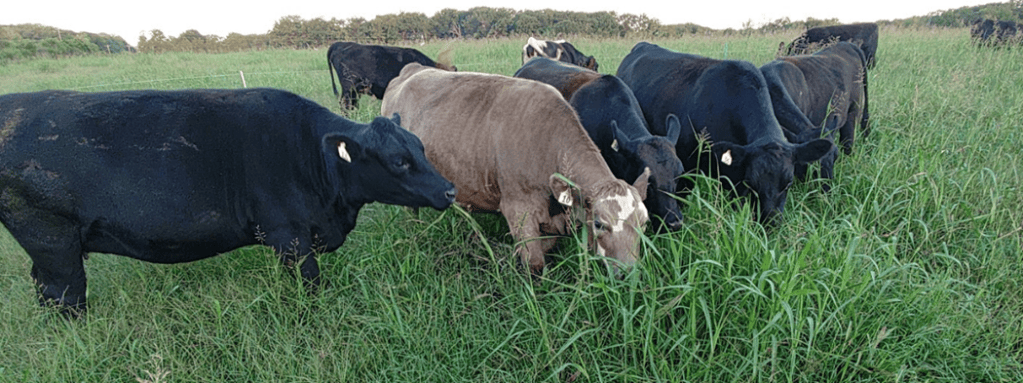
To move the needle on soil health you need to apply the Soil Health Principles: 1) keep living roots in the ground, 2) maintain surface cover, 3) promote species diversity (plant and animal), 4) use an appropriate level of disturbance, and 5) work within your context. You can find these explained in more detail in many places. My list does not include “incorporate livestock” as that is a give for our systems. Most also say you should “minimize disturbance” but I prefer to say “use an appropriate level of disturbance” because there is nothing more important to a pasture than creating disturbance through grazing; it just needs to be followed by a long rest period.
The key to being successful is to be adaptive in your approach to the system. Pastures represent a very complex ecosystem, and the human manager is the central and key component to the system. Regenerating the system is critically dependent on the human manager applying their management and then observing the outcomes. This reiterative process results in an evolution of the pasture ecosystem. It is critical that the human manager uses the power of observation to learn how to steer their farm in the correct direction.
Adaptive Management is key in grazing systems as so many factors are out of the manager’s control. We can’t always successfully predict what will happen when we apply management, but we can follow up and learn from our successes or failures. If we keep the mindset that there are no mistakes as long as we learn when things don’t go just right, then we will be more effective.
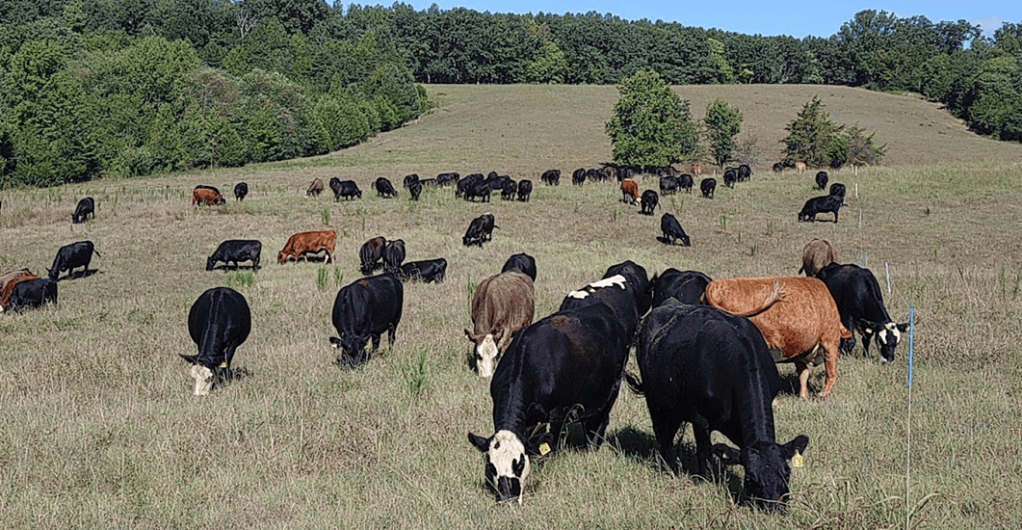
Finally, the last key is to be tenacious and maintain a long-term perspective. Improvements in the system can be seen if you watch for them, but the improvements are actually quite slow, and it takes many years to reach that level of inherent productivity we all are shooting for. You can’t do this for a few years and then walk away and assume everything will continue to improve. Long-term success means accepting that this concept takes a lifetime commitment, and also the need to find young folks to carry the system on into the future.
How do you keep this up for the long run? Find joy in the ecosystem as it evolves around you! If you watch, you will start seeing signs of success; the incredible number of spiders found in a healthy pasture, the increased sighting of wildlife including raptors seeking rodents and other small mammals, a return of bobwhite quail, or the dramatic visual impact of dung beetles. All of these components of the pasture ecosystem are going on around you, and when you are physically and mentally present in your pastures you get to see them close up.
In a time when there is too much conflict, violence and hate in the world, it really eases my mind to put my feet on the ground in healthy pastures. Take some time away from all those negative things coming at you on your cell phone, on the TV and at the coffee shop and spend more time in your pastures. Creating a healthy pasture ecosystem is one example of how much good you can do when you stick to your principles and maintain a positive and regenerative mindset.
~ Matt Poore. Reprinted with permission from the Amazing Grazing column in the Carolina Cattle Connection, November, 2026
The Alliance for Grassland Renewal is a national organization focused on enhancing the appropriate adoption of novel endophyte tall fescue technology through education, incentives, self-regulation and promotion. For more resources or to learn more about the Alliance for Grassland Renewal, go to www.grasslandrenewal.org

