At this time all Novel Endophyte Tall Fescue should be planted, as recommended by all states in the tall fescue belt. Due to warm and dry weather this fall, many farmers delayed past normal planting dates, waiting for moisture. It is important to plant as early as possible to make sure plants are big enough to survive cold winter temperatures, but sometimes environmental conditions discourage early planting.
The Alliance for Grassland Renewal recommends holding off on seeding past the generally recommended dates if soil is excessively dry. However, there is a “trigger” date at which all seed should go in the ground, even if there is no soil moisture. The final trigger date for the southern regions of the fescue belt is November 15, so if you have not planted yet, get that seed in the ground in the next several days. Recent rains in many areas will really help stands that were planted this fall, and will boost second year stands as well. Rain is still badly needed in many areas of the Eastern Tall Fescue Belt, so keep hoping for good conditions to come at last.
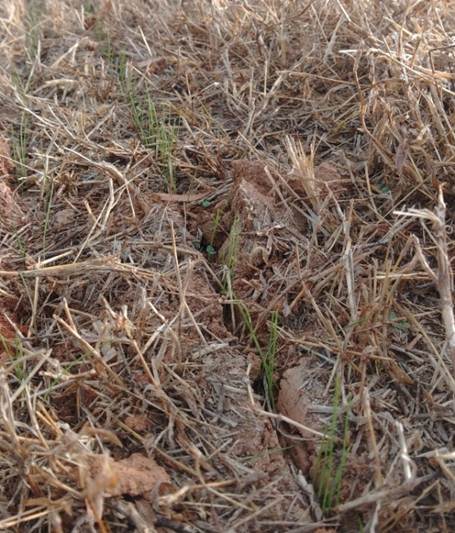
Once the seed is in the ground, monitor it periodically to look for germination. Of course, if you planted on time and had some moisture then this all started a month or more ago and plants should be starting to tiller. If you have some moisture, germination should happen in about 5 to 8 days. If it is dry, then rest assured that the seed will wait on moisture and then will germinate. Some areas in the pasture with some soil moisture may germinate, and others not, and this is normal. As you check these fields, scout for weed seedlings and start planning on your spraying program. Check back periodically on the stand, but don’t obsess about it because there is really nothing you can do this month unless irrigation is an option for you. Be encouraged if you see seedlings, but don’t be too discouraged if the new stand is spotty; things will improve as the fall season progresses. If you do have access to irrigation then apply a significant amount of water (1 inch) to get germination, and then again if needed to maintain soil moisture.
Novel endophyte tall fescue stands planted last year can be grazed as needed, making sure not to graze shorter than 4”, and allowing rest to protect regrowth from grazing. If you have significant skips or places where the stand is not good then graze short and overdrill with novel endophyte tall fescue or other cool season perennials after grazing or haying to make sure undesirable species don’t take hold in these areas. Stand thinning is not unusual, especially given environmental conditions the last several years, so make sure you are scouting and taking action when it is called for.
We have received a number of reports of thinning stands of novel endophyte tall fescue that were good stands initially but which have significantly declined the last few years. This is actually happening to all tall fescue stands, including KY31, across the southern reaches of the tall fescue belt. There are a number of things that may be contributing to this. First, not all soils are suitable for tall fescue. Sandy textured soils (with “sand” in the name like a sandy loam) may not support long-term stands of tall fescue. This is partly due to direct challenges to the fescue from pests like nematodes, but also is due to competition from warm season species. There are many examples of soils that at one time supported healthy stands of tall fescue, that are no longer able to hold stands indefinitely.
Hot weather coupled with the big swings between dry and wet conditions we have seen in recent years also seem especially troublesome to tall fescue. Some of this is due to disease challenges, but also these conditions seem to be really good for warm season grasses like bermudagrass, dallisgrass and Johnsongrass. Also, when bare ground is present you can expect a lot of competition from annual grasses like crabgrass and foxtail. There are herbicides that can help with this situation, which may include a combination of a pre-emergent and post-emergent product. If you are experiencing a lot of warm-season annuals invading your tall fescue stands contact your extension agent for help developing a control strategy.
Remember that KY31 tall fescue is especially toxic during the autumn growing season. Especially when dry conditions are followed by wet, the resulting biomass is very toxic during September, October and November. In December the toxin levels start to decline, so traditional stockpiling programs recommend grazing after mid-December. With novel endophyte tall fescue, there are no ergot toxins produced in the autumn, so it can be rotationally grazed as needed or stockpiled for use later in winter. Research has shown that novel endophyte tall fescue holds up in stockpiling as well as toxic tall fescue, so don’t be afraid to stockpile.
If you have not tested your hay, take samples and have them analyzed. Forage testing is one of the most underutilized resources there is. Whether you sell hay or use it yourself, testing forage is the only way to reliably feed a balanced ration. While you are at it weigh some representative bales. Farmers almost always overestimate the weight of their bales, and this is a real problem if you are making a feed budget. There is also a growing premium market for Novel Endophtye Tall Fescue Hay, and providing a nutrient test and a real bale weight is another added value you can offer your customers.
~ Matt Poore for the Alliance for Grassland Renewal
The Alliance for Grassland Renewal is a national organization focused on enhancing the appropriate adoption of novel endophyte tall fescue technology through education, incentives, self-regulation and promotion. For more resources or to learn more about the Alliance for Grassland Renewal, go to www.grasslandrenewal.org

